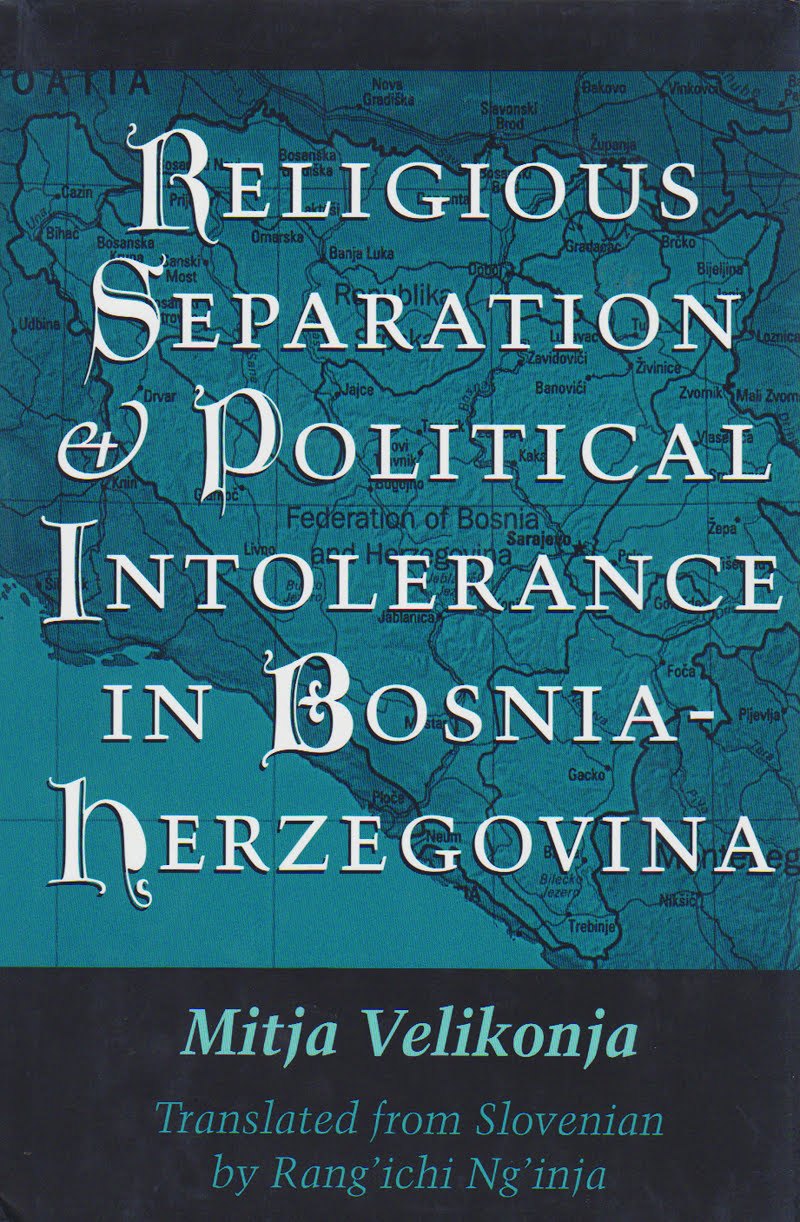
Religious Separation and Political Intolerance in Bosnia-Herzegovina

Religious Separation and Political Intolerance in Bosnia-Herzegovina

by Mitja Velikonja

384 pages· 2003· ISBN 9781603447249
About
Mitja Velikonja has written a comprehensive survey that examines how religion has interacted with other aspects of Bosnia-Herzegovina's history. Velikonja sees the former Ottoman borderland as a distinct cultural and religious entity where three major faiths -- Islam, Catholicism, and Orthodoxy -- managed to coexist in relative peace. It is only during the past century that competing nationalisms have led to persecution, ethnic cleansing, and mass murder. Emphasizing the importance of religion to nationalism as a symbol of collective identity that strengthens national identity, Velikonja notes that religious groups have a tendency to become isolated from one another. He believes Bosnia-Herzegovina was unique in its sarlikost, or diversity, because while religion defined ethnic communities there and kept them separate, it did not create a culture of intolerance. Rather than suppressing one another, the region's ethno-religious groups learned to cooperate and mediate their differences -- useful behavior in an area that served as buffer between East and West for most of its history. Velikonja believes that Bosnians went beyond tolerance to embrace synthetic, eclectic religious norms, with each religious group often borrowing customs and rituals from its rivals. Rather than the extreme orthodoxy evident elsewhere in Europe, Bosnia became the home of heterodoxy. Sadly, nationalism changed all that, and the area became the scene of systematic persecution, forced conversion, and mass slaughter. Velikonja considers the misfortunes suffered by the Bosnians during the 1990s as largely the result of actions by their neighbors and local militants and inaction by the international community.But he also sees the tragedy that unfolded as the result of the exploitation of ethno-religious differences and myths by Serbian chauvinists and Croatian nationalists. Despite the tragedy that overwhelmed Bosnia-Herzegovina

Discuss Religious Separation and Political Intolerance in Bosnia-Herzegovina with other readers

Join or start a book club for Religious Separation and Political Intolerance in Bosnia-Herzegovina on Readfeed. Live chat, shared reading progress, and AI discussion questions — free to get started.

Frequently asked questions

How do I join a book club for Religious Separation and Political Intolerance in Bosnia-Herzegovina?

Sign up free on Readfeed, then browse public clubs or start your own club with Religious Separation and Political Intolerance in Bosnia-Herzegovina as the current read. Invite friends with a share link and discuss together with live chat and AI discussion questions.

Can I discuss Religious Separation and Political Intolerance in Bosnia-Herzegovina with other readers online?

Yes. Readfeed book clubs let you chat live, share progress, and join discussions about Religious Separation and Political Intolerance in Bosnia-Herzegovina with readers worldwide — whether your club is virtual, in-person, or hybrid.

Is Readfeed free?

Yes. Creating an account and joining book clubs is free. Sign up to find readers who love the same books and start discussing today.