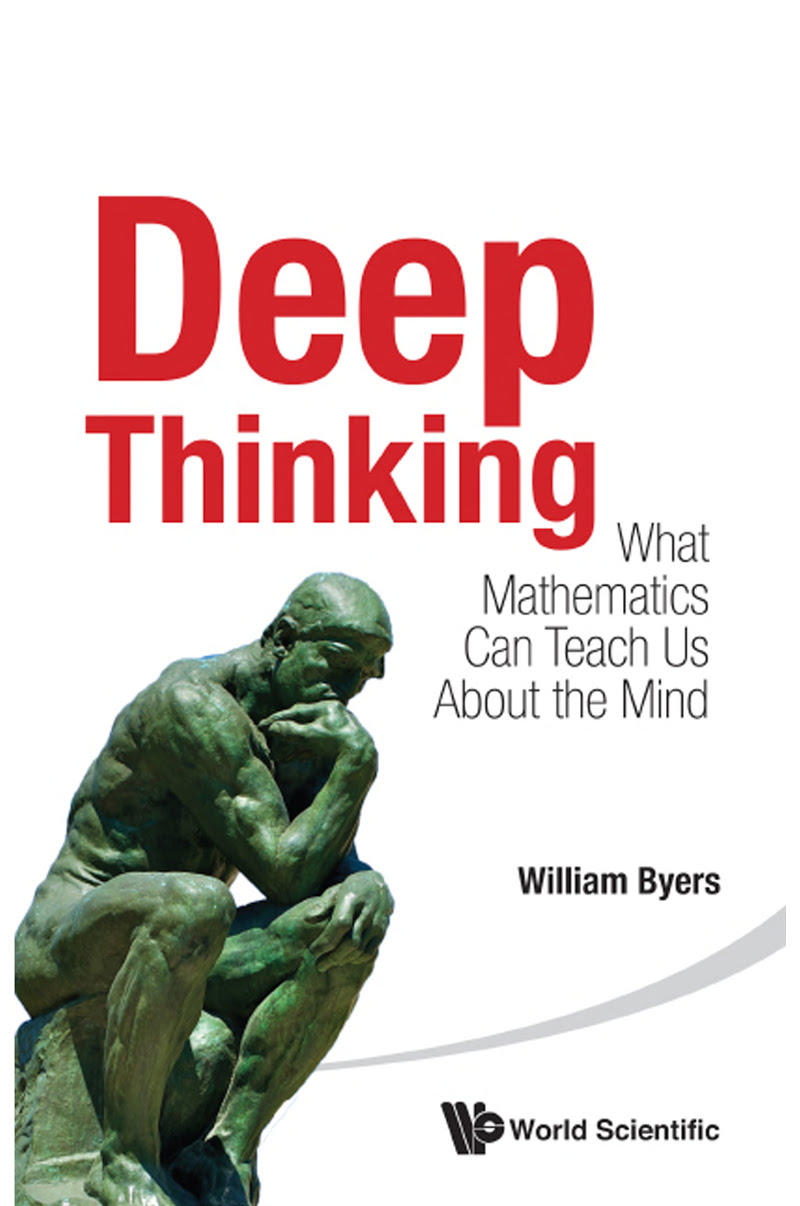
Deep Thinking
What Mathematics Can Teach Us About the Mind
by William Byers
264 pages· 2014· ISBN 9789814618052
About
There is more than one way to think. Most people are familiar with the systematic, rule-based thinking that one finds in a mathematical proof or a computer program. But such thinking does not produce breakthroughs in mathematics and science nor is it the kind of thinking that results in significant learning. Deep thinking is a different and more basic way of using the mind. It results in the discontinuous “aha!” experience, which is the essence of creativity. It is at the heart of every paradigm shift or reframing of a problematic situation. The identification of deep thinking as the default state of the mind has the potential to reframe our current approach to technological change, education, and the nature of mathematics and science. For example, there is an unbridgeable gap between deep thinking and computer simulations of thinking. Many people suspect that such a gap exists, but find it difficult to make this intuition precise. This book identifies the way in which the authentic intelligence of deep thinking differs from the artificial intelligence of “big data” and “analytics”. Deep thinking is the essential ingredient in every significant learning experience, which leads to a new way to think about education. It is also essential to the construction of conceptual systems that are at the heart of mathematics and science, and of the technologies that shape the modern world. Deep thinking can be found whenever one conceptual system morphs into another. The sources of this study include the cognitive development of numbers in children, neuropsychology, the study of creativity, and the historical development of mathematics and science. The approach is unusual and original. It comes out of the author's lengthy experience as a mathematician, teacher, and writer of books about mathematics and science, such as How Mathematicians Think: Using Ambiguity, Contradiction, and Paradox to Create Mathematics and The Blind Spot: Science and the Crisis of Uncertainty. Contents:What is Deep Thinking?Conceptual SystemsDeep Thinking in Mathematics and ScienceDeep Thinking in the Mind and the BrainDeep Thinking and CreativityDeep LearningGood TeachingUndergraduate MathematicsWhat the Mind Can Teach Us About MathematicsWhat Mathematics Can Teach Us About the MindReferences Readership: Students, graduate students and researchers with an interest in mathematics, mathematicians, scientists, philosophers, psychologists, and readers who use mathematics in their work. Key Features:In this book, the author, a mathematician, demonstrates the specific difference between creative mathematical thought and the analytic thought of logic and the artificial intelligence of computersThis book shows why learning is a creative activity and demonstrates how teaching and learning must undergo radical changes in this age of rapid technological changeMathematics is a model for how people think and it reveals the essence of intelligenceThe author, a mathematician, demonstrates that creativity is a basic feature of the world. The same phenomenon of creative intelligence underlies the theory of evolution, child development, learning, and scientific and mathematical research. Creativity is so natural that even babies are capable of it but so difficult that adults have great trouble with it. This book explains the reasons behind this apparent paradoxKeywords:Mathematics;Cognitive Development;Thinking;Education;Mathematics Education;Conceptual Systems
Discuss Deep Thinking with other readers
Join or start a book club for Deep Thinking on Readfeed. Live chat, shared reading progress, and AI discussion questions — free to get started.
Frequently asked questions
How do I join a book club for Deep Thinking?
Sign up free on Readfeed, then browse public clubs or start your own club with Deep Thinking as the current read. Invite friends with a share link and discuss together with live chat and AI discussion questions.
Can I discuss Deep Thinking with other readers online?
Yes. Readfeed book clubs let you chat live, share progress, and join discussions about Deep Thinking with readers worldwide — whether your club is virtual, in-person, or hybrid.
Is Readfeed free?
Yes. Creating an account and joining book clubs is free. Sign up to find readers who love the same books and start discussing today.