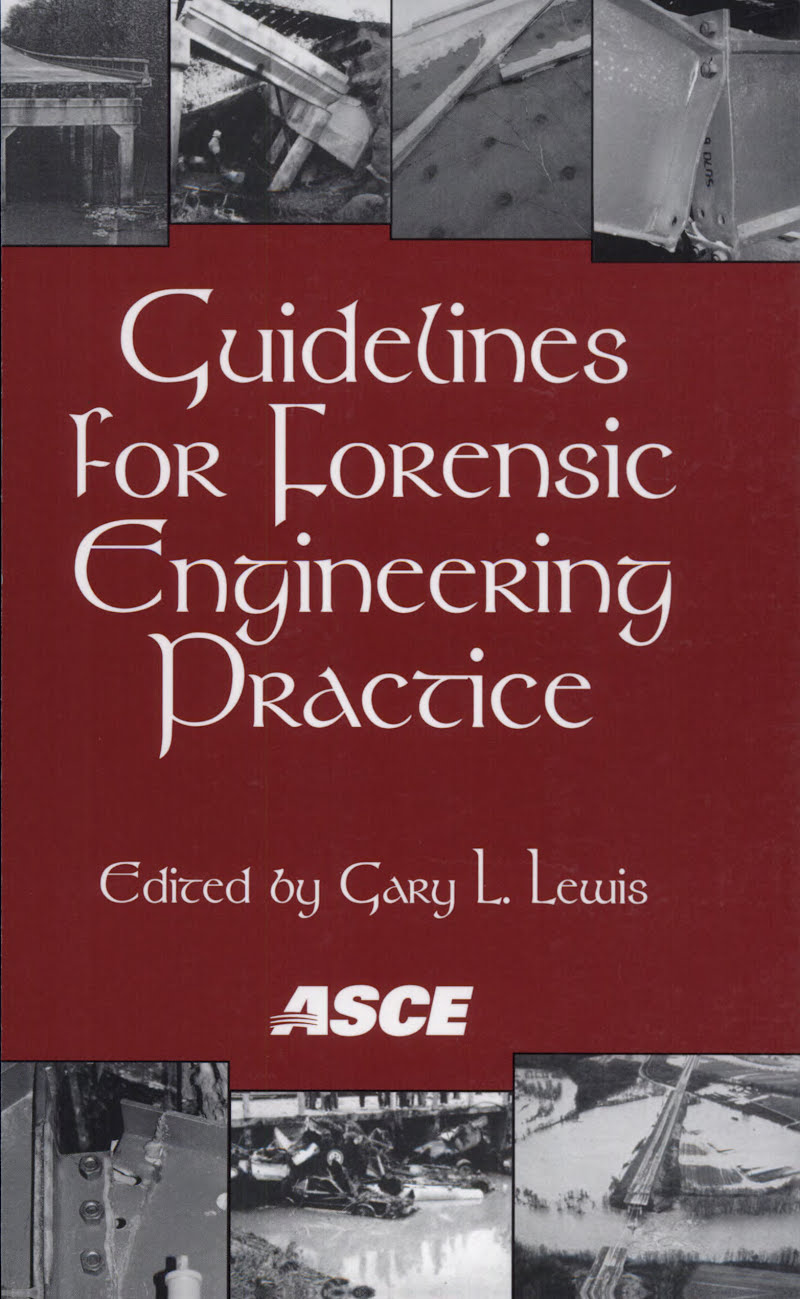
Guidelines for Forensic Engineering Practice

Guidelines for Forensic Engineering Practice

by Gary L. Lewis

140 pages· 2003· ISBN 9780784475409
About
Sponsored by the Forensic Engineering Practice Committee of the Technical Council on Forensic Engineering of ASCE. This report provides the fundamentals of developing a practice that includes forensic engineering. Within the broad field of civil engineering, forensic engineering involves the investigation of performance, difficulties, or failures of buildings, structures, pipelines, foundations, airplanes, manufacturing equipment, vehicles, bridges, flood control facilities, and other engineered products. This report covers five general topics important to the practice of forensic engineering. "Qualifications" addresses commonly accepted education and experience requirements for forensic engineers. Various aspects of federal and state law are cited with an expanded section on admissibility. and disqualifications are discussed. "Investigations" shows the typical aspects of physically carrying out a forensic investigation, such as the handling of evidence for subsequent courtroom presentation. "Ethics" fulfills a professional charge to promulgate guidelines for ethical behavior of the forensic engineer. "Legal" gives a brief overview of the court system as it applies to the construction industry, including the role of the forensic engineer as an expert witness. "Business" describes the nontechnical management side of forensic engineering practices; the marketing of forensic engineering services within an acceptable ethical scheme is encouraged.

Discuss Guidelines for Forensic Engineering Practice with other readers

Join or start a book club for Guidelines for Forensic Engineering Practice on Readfeed. Live chat, shared reading progress, and AI discussion questions — free to get started.

Frequently asked questions

How do I join a book club for Guidelines for Forensic Engineering Practice?

Sign up free on Readfeed, then browse public clubs or start your own club with Guidelines for Forensic Engineering Practice as the current read. Invite friends with a share link and discuss together with live chat and AI discussion questions.

Can I discuss Guidelines for Forensic Engineering Practice with other readers online?

Yes. Readfeed book clubs let you chat live, share progress, and join discussions about Guidelines for Forensic Engineering Practice with readers worldwide — whether your club is virtual, in-person, or hybrid.

Is Readfeed free?

Yes. Creating an account and joining book clubs is free. Sign up to find readers who love the same books and start discussing today.