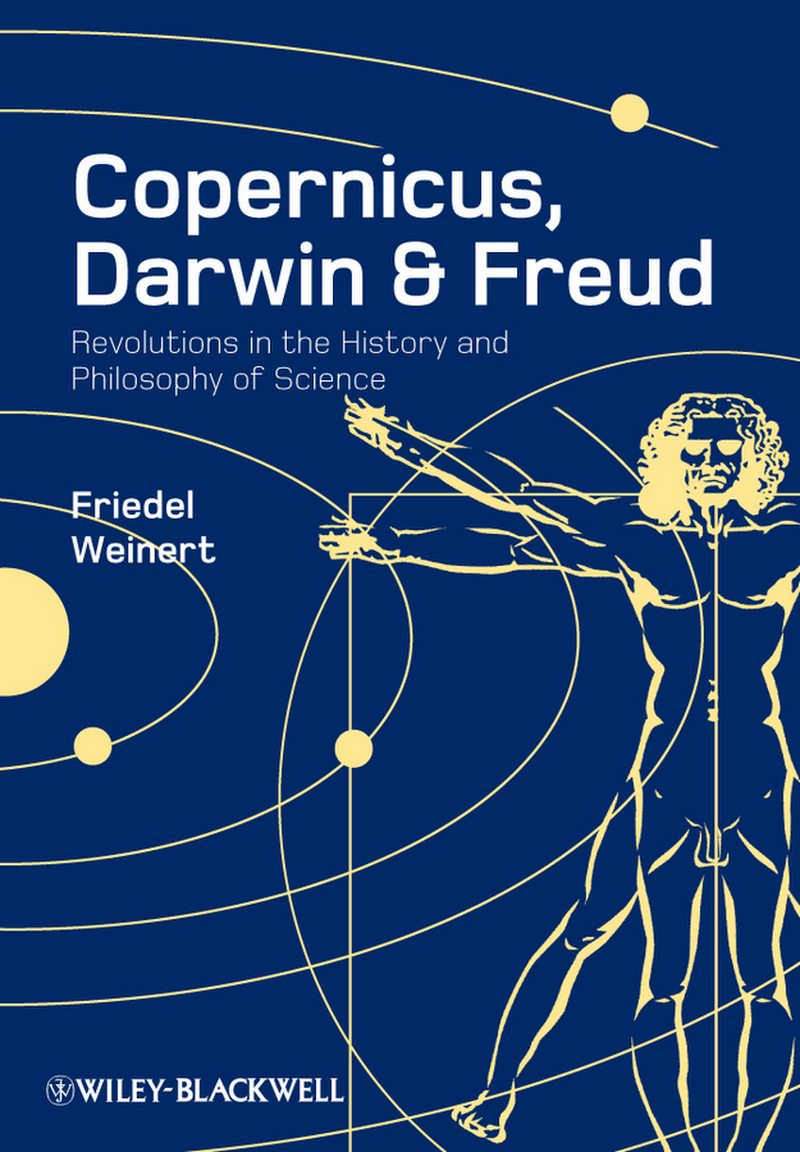
Copernicus, Darwin and Freud

Copernicus, Darwin and Freud

Revolutions in the History and Philosophy of Science

by Friedel Weinert

284 pages· 2009· ISBN 9781405181839
About
Scientific ideas change the way we think about the world and our place in it. Nicolaus Copernicus developed a heliocentric view of the cosmos that displaced humans from the physical center of the universe. Charles Darwin developed an evolutionary theory that placed humans firmly within the organismic order of nature. It was Sigmund Freud who saw himself as completing this cycle of disparagement by destroying the belief that humans were 'masters in their own house'. "Copernicus, Darwin and Freud: Revolutions in the History and Philosophy of Science" deals with issues in the area of intersection between history and philosophy of natural and social science. Using Copernicanism, Darwinism and Freudianism as extended case studies, Friedel Weinert illustrates the profound connections between science and philosophy and shows how scientific theories invariably have philosophical consequences. Philosophical controversies surrounding ideas of human nature, realism and instrumentalism, models and theories, laws of nature and scientific method are all examined within the context of concrete problem situations in the history of science. "Copernicus, Darwin and Freud" is an engaging and versatile text suitable for a variety of courses in the history and philosophy of science or for individual study.

Discuss Copernicus, Darwin and Freud with other readers

Join or start a book club for Copernicus, Darwin and Freud on Readfeed. Live chat, shared reading progress, and AI discussion questions — free to get started.

Frequently asked questions

How do I join a book club for Copernicus, Darwin and Freud?

Sign up free on Readfeed, then browse public clubs or start your own club with Copernicus, Darwin and Freud as the current read. Invite friends with a share link and discuss together with live chat and AI discussion questions.

Can I discuss Copernicus, Darwin and Freud with other readers online?

Yes. Readfeed book clubs let you chat live, share progress, and join discussions about Copernicus, Darwin and Freud with readers worldwide — whether your club is virtual, in-person, or hybrid.

Is Readfeed free?

Yes. Creating an account and joining book clubs is free. Sign up to find readers who love the same books and start discussing today.