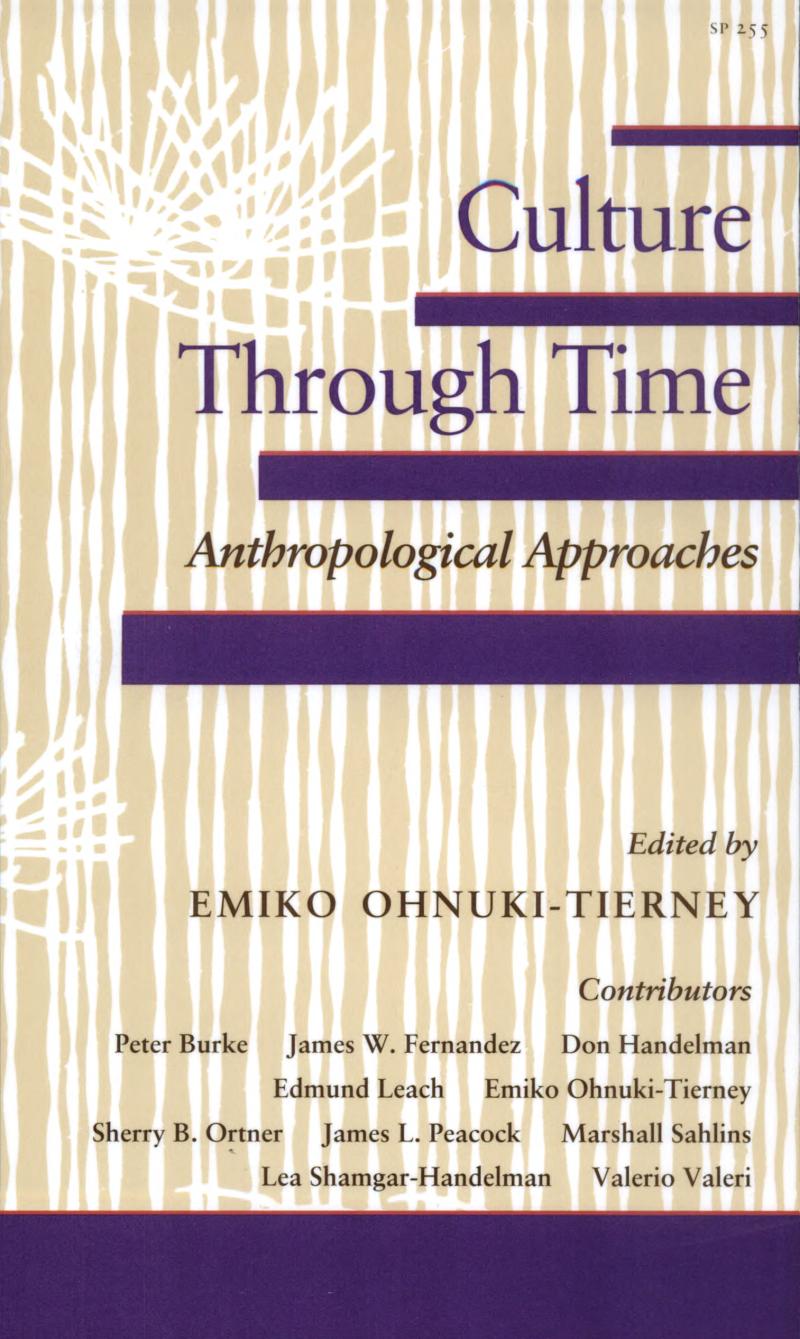
Culture Through Time
Anthropological Approaches
by Emiko Ohnuki-Tierney
330 pages· 1990· ISBN 9780804717915
About
Anthropological literature has traditionally been static and synchronic, only occasionally according a role to historical processes. but recent years have seen a burgeoning exchange between anthropology and history, each field taking on a powerful new dimension in consequence. Just what this means for anthropologists has not been clear, and this collection (eight core papers plus introduction and final commentary) introduces focus and direction to this interface between anthropology challenges several basic assumptions long held by anthropologists. Researchers can no longer be satisfied with approaches epitomized in 'the ethnographic present'. Society may be a bounded entity, but culture cannot be treated as such; a culture should be examined as it has interacted with other cultures and with its environment over time. Many traditionalists in anthropology, faced with these disturbing new challenges, fear the disintegration of the discipline; but these thoughtful papers demonstrate, on the contrary, its vitality, growth, and promise.
Discuss Culture Through Time with other readers
Join or start a book club for Culture Through Time on Readfeed. Live chat, shared reading progress, and AI discussion questions — free to get started.
Frequently asked questions
How do I join a book club for Culture Through Time?
Sign up free on Readfeed, then browse public clubs or start your own club with Culture Through Time as the current read. Invite friends with a share link and discuss together with live chat and AI discussion questions.
Can I discuss Culture Through Time with other readers online?
Yes. Readfeed book clubs let you chat live, share progress, and join discussions about Culture Through Time with readers worldwide — whether your club is virtual, in-person, or hybrid.
Is Readfeed free?
Yes. Creating an account and joining book clubs is free. Sign up to find readers who love the same books and start discussing today.