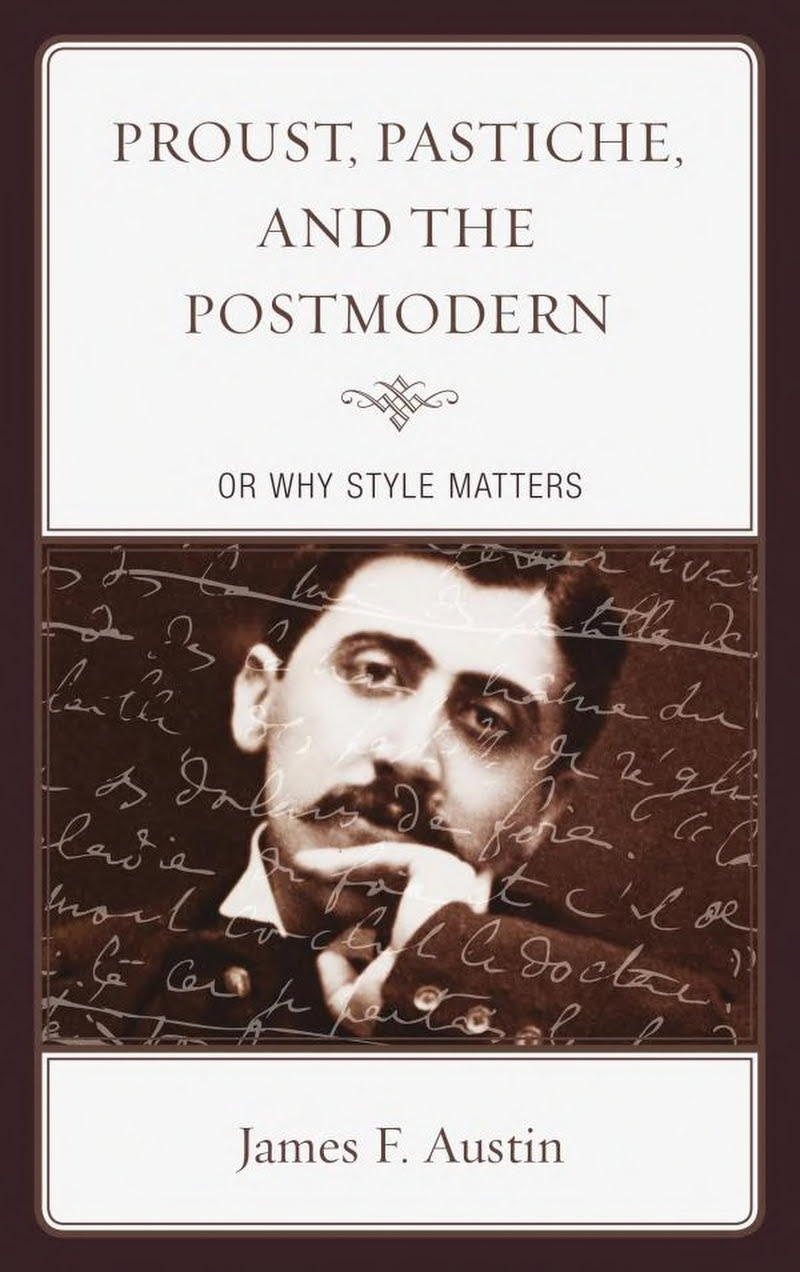
Proust, Pastiche, and the Postmodern or Why Style Matters

Proust, Pastiche, and the Postmodern or Why Style Matters

by James F. Austin

264 pages· 2013· ISBN 9781611484113
About
Proust, Pastiche, and the Postmodern, or Why Style Matters argues against the traditional view that Marcel Proust wrote pastiches, that is, texts that imitate the style of another author, to master his literary predecessors while sharpening his writerly quill. On the contrary, James F. Austin demonstrates that Proust’s oeuvre, and In Search of Lost Time in particular, deploy pastiche to other ends: Proust’s pastiches, in fact, “do things with words” to create powerful real-world effects. His works are indeed performative acts that forge social relationships, redefine our ideas of literature, and even work against oppressive political and economic discourses. Building on the “speech-act” theory of J.L. Austin, Jacques Derrida, and J. Hillis Miller, and on the postmodern theory of Fredric Jameson, this book not only elucidates the performative nature of pastiche, but also shows that the famous “Goncourt” pastiche from In Search of Lost Time has attracted so much attention because it already attained the postmodern; that is, it eliminated temporal depth and experience, transforming time itself into a nostalgic style of an era, and into the sort of aestheticized surface that came to define postmodernism decades later. To reflect this transformation of pastiche, this work rearticulates its history in France around Proust. Reconfiguring a scholastic, classically-inspired pedagogical tradition based on imitation, and breaking with the dominant satirical practice, Proust’s work opened up possibilities in the twentieth century for a new kind of pastiche: playful and performative in the literary field, and postmodern in a French cinema that, as with the Goncourt pastiche, represents time as the visual style of an era, whether unreflexively in “heritage” films such as Régis Wargnier’s Indochine, or discerningly in Eric Rohmer’s Lady and the Duke, which uses period pictorial and painterly conventions to illustrate how the representation of history onscreen typically flattens time into style.

Discuss Proust, Pastiche, and the Postmodern or Why Style Matters with other readers

Join or start a book club for Proust, Pastiche, and the Postmodern or Why Style Matters on Readfeed. Live chat, shared reading progress, and AI discussion questions — free to get started.

Frequently asked questions

How do I join a book club for Proust, Pastiche, and the Postmodern or Why Style Matters?

Sign up free on Readfeed, then browse public clubs or start your own club with Proust, Pastiche, and the Postmodern or Why Style Matters as the current read. Invite friends with a share link and discuss together with live chat and AI discussion questions.

Can I discuss Proust, Pastiche, and the Postmodern or Why Style Matters with other readers online?

Yes. Readfeed book clubs let you chat live, share progress, and join discussions about Proust, Pastiche, and the Postmodern or Why Style Matters with readers worldwide — whether your club is virtual, in-person, or hybrid.

Is Readfeed free?

Yes. Creating an account and joining book clubs is free. Sign up to find readers who love the same books and start discussing today.