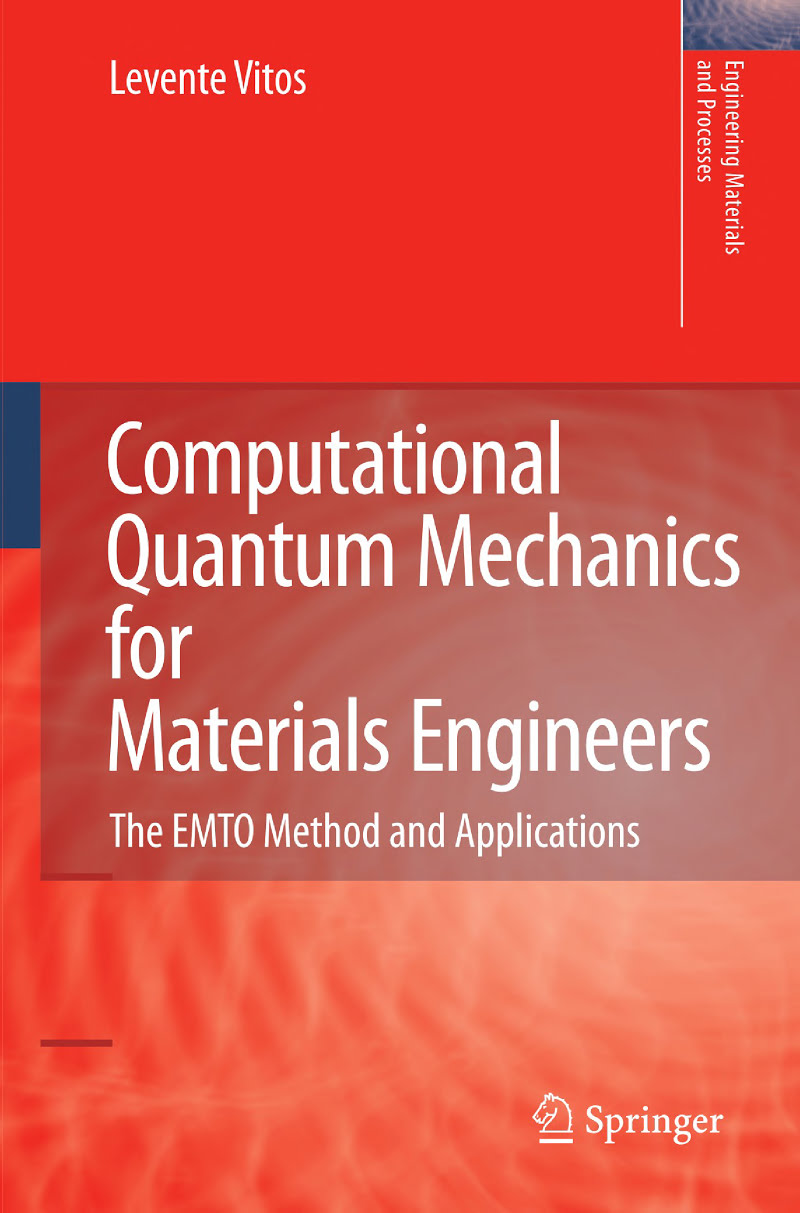
Computational Quantum Mechanics for Materials Engineers

Computational Quantum Mechanics for Materials Engineers

The EMTO Method and Applications

by Levente Vitos

249 pages· 2007· ISBN 9781846289514
About
Traditionally, new materials have been developed by empirically correlating their chemical composition, and the manufacturing processes used to form them, with their properties. Until recently, metallurgists have not used quantum theory for practical purposes. However, the development of modern density functional methods means that today, computational quantum mechanics can help engineers to identify and develop novel materials. “Computational Quantum Mechanics for Materials Engineers” describes new approaches to the modelling of disordered alloys that combine the most efficient quantum-level theories of random alloys with the most sophisticated numerical techniques to establish a theoretical insight into the electronic structure of complex materials such as stainless steels, Hume-Rothery alloys and silicates. The practical success of these approaches to applications in all of these areas are covered in detail. The new EMTO-CPA method is detailed, including its application in alloys to model structural stability and elastic properties of random alloys of arbitrary composition and the effect of alloying elements on elastic stiffnesses stacking fault energies and structural parameters. The EMTO-CPA method makes new approaches to computational alloy design feasible. “Computational Quantum Mechanics for Materials Engineers” shows how the technique will soon allow materials engineers to become “quantum blacksmiths”. “Computational Quantum Mechanics for Materials Engineers” will interest researchers and postgraduate students in materials science and engineering, solid-state physics and applied quantum mechanics.

Discuss Computational Quantum Mechanics for Materials Engineers with other readers

Join or start a book club for Computational Quantum Mechanics for Materials Engineers on Readfeed. Live chat, shared reading progress, and AI discussion questions — free to get started.

Frequently asked questions

How do I join a book club for Computational Quantum Mechanics for Materials Engineers?

Sign up free on Readfeed, then browse public clubs or start your own club with Computational Quantum Mechanics for Materials Engineers as the current read. Invite friends with a share link and discuss together with live chat and AI discussion questions.

Can I discuss Computational Quantum Mechanics for Materials Engineers with other readers online?

Yes. Readfeed book clubs let you chat live, share progress, and join discussions about Computational Quantum Mechanics for Materials Engineers with readers worldwide — whether your club is virtual, in-person, or hybrid.

Is Readfeed free?

Yes. Creating an account and joining book clubs is free. Sign up to find readers who love the same books and start discussing today.