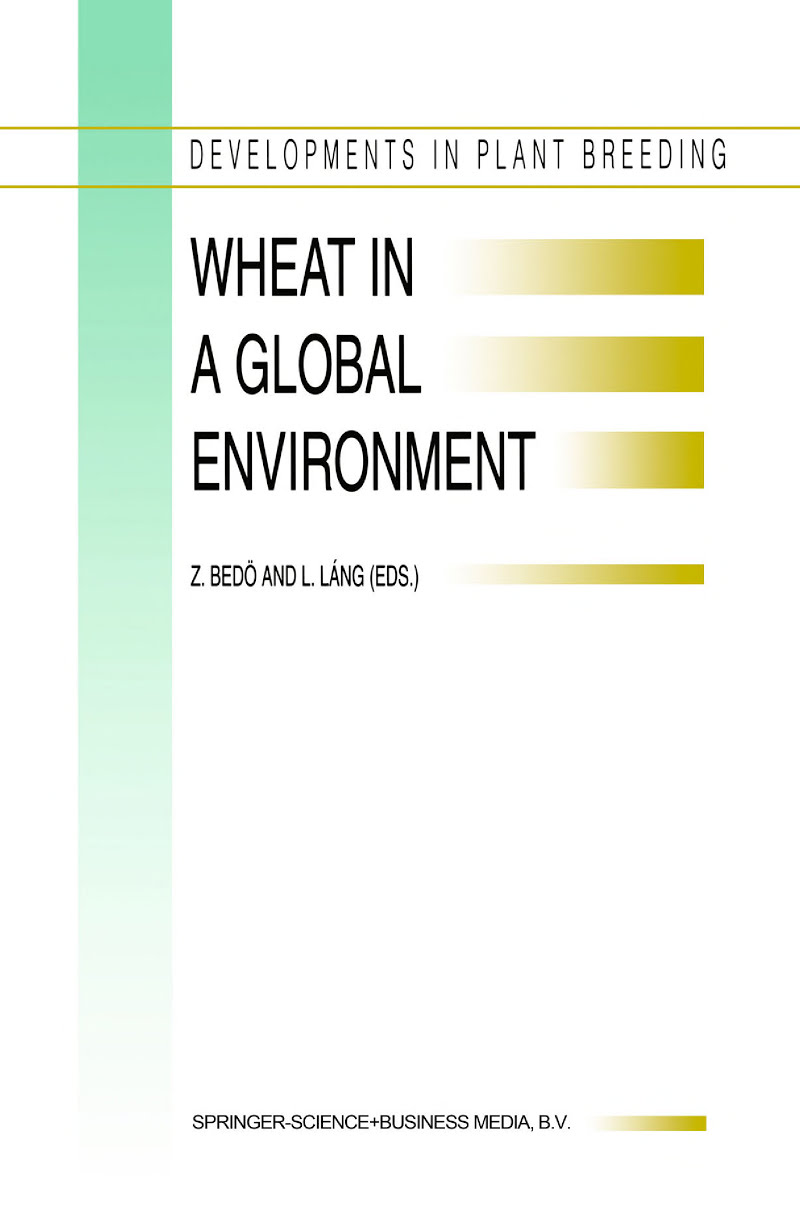
Wheat in a Global Environment

Wheat in a Global Environment

Proceedings of the 6th International Wheat Conference, 5–9 June 2000, Budapest, Hungary

by Z. Bedo, L. Láng

788 pages· 2013· ISBN 9789401736749
About
Wheat breeders have achieved significant results over the last fifty years in research on mankind's one of the most important crops. Classical genetic and breeding methods, far broader international cooperation than was experienced in earlier periods, and improvements in agronomic techniques have led to previously unimaginable development in the utilisation of wheat for human consumption. The contribution of wheat researchers is particularly noteworthy since these results have been achieved at a time when the world population has grown extremely dynamically. Despite this demographic explosion, of a proportion never previously experienced, thousands of millions of people have been saved from starvation, thus avoiding unpredictable social consequences and situations irreconcilable with human dignity. Despite these developments in many regions of the world food supplies are still uncertain and the increase in the world's wheat production has not kept pace with the population increase during the last decade. Due to the evils of civilisation and the pollution of the environment there is a constant decline in the per capita area of land suitable for agricultural production. Based on population estimates for 2030, the present wheat yield of around 600 million tonnes will have to be increased to almost 1000 million tonnes if food supplies are to be maintained at the present level.

Discuss Wheat in a Global Environment with other readers

Join or start a book club for Wheat in a Global Environment on Readfeed. Live chat, shared reading progress, and AI discussion questions — free to get started.

Frequently asked questions

How do I join a book club for Wheat in a Global Environment?

Sign up free on Readfeed, then browse public clubs or start your own club with Wheat in a Global Environment as the current read. Invite friends with a share link and discuss together with live chat and AI discussion questions.

Can I discuss Wheat in a Global Environment with other readers online?

Yes. Readfeed book clubs let you chat live, share progress, and join discussions about Wheat in a Global Environment with readers worldwide — whether your club is virtual, in-person, or hybrid.

Is Readfeed free?

Yes. Creating an account and joining book clubs is free. Sign up to find readers who love the same books and start discussing today.