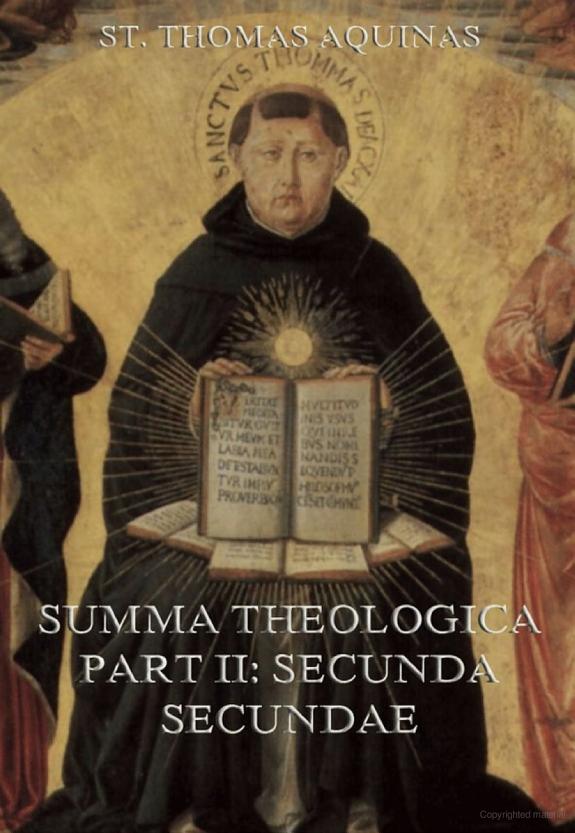
Summa Theologica Part II ("Secunda Secundae") (Extended Annotated Edition)

Summa Theologica Part II ("Secunda Secundae") (Extended Annotated Edition)

by St. Thomas Aquinas

1797 pages· 2012· ISBN 9783849620899
About
This is the extended and annotated edition including * an extensive biographical annotation about the author and his life The Summa Theologiæ (Latin: Compendium of Theology or Theological Compendium; also subsequently called the Summa Theologica or simply the Summa, written 1265–1274) is the best-known work of Thomas Aquinas (c.1225–1274), and although unfinished, "one of the classics of the history of philosophy and one of the most influential works of Western literature." It is intended as a manual for beginners in theology and a compendium of all of the main theological teachings of the Church. It presents the reasoning for almost all points of Christian theology in the West. The Summa's topics follow a cycle: the existence of God; Creation, Man; Man's purpose; Christ; the Sacraments; and back to God. (courtesy of wikipedia.com). This is part 2-2, 'Secunda Secundae'. In a chain of acts of will, man strives for the highest end. They are free acts, insofar as man has in himself the knowledge of their end (and therein the principle of action). In that the will wills the end, it wills also the appropriate means, chooses freely and completes the consensus. Whether the act be good or evil depends on the end. The "human reason" pronounces judgment concerning the character of the end; it is, therefore, the law for action. Human acts, however, are meritorious insofar as they promote the purpose of God and his honor. By repeating a good action, man acquires a moral habit or a quality which enables him to do the good gladly and easily. This is true, however, only of the intellectual and moral virtues (which Aquinas treats after the manner of Aristotle); the theological virtues are imparted by God to man as a "disposition", from which the acts here proceed; while they strengthen, they do not form it. The "disposition" of evil is the opposite alternative. An act becomes evil through deviation from the reason, and from divine moral law. Therefore, sin involves two factors: its substance (or matter) is lust; in form, however, it is deviation from the divine law. Contents: • Treatise on the theological virtues (qq. 1 to 46) • Treatise on the cardinal virtues (qq. 47 to 170) • Treatise on prudence (qq. 47 to 56) • Treatise on justice (qq. 57 to 122) • Treatise on fortitude and temperance (qq. 123 to 170) • Treatise on gratuitous graces (qq. 171 to 182) • Treatise on the states of life (qq. 183 to 189)

Discuss Summa Theologica Part II ("Secunda Secundae") (Extended Annotated Edition) with other readers

Join or start a book club for Summa Theologica Part II ("Secunda Secundae") (Extended Annotated Edition) on Readfeed. Live chat, shared reading progress, and AI discussion questions — free to get started.

Frequently asked questions

How do I join a book club for Summa Theologica Part II ("Secunda Secundae") (Extended Annotated Edition)?

Sign up free on Readfeed, then browse public clubs or start your own club with Summa Theologica Part II ("Secunda Secundae") (Extended Annotated Edition) as the current read. Invite friends with a share link and discuss together with live chat and AI discussion questions.

Can I discuss Summa Theologica Part II ("Secunda Secundae") (Extended Annotated Edition) with other readers online?

Yes. Readfeed book clubs let you chat live, share progress, and join discussions about Summa Theologica Part II ("Secunda Secundae") (Extended Annotated Edition) with readers worldwide — whether your club is virtual, in-person, or hybrid.

Is Readfeed free?

Yes. Creating an account and joining book clubs is free. Sign up to find readers who love the same books and start discussing today.