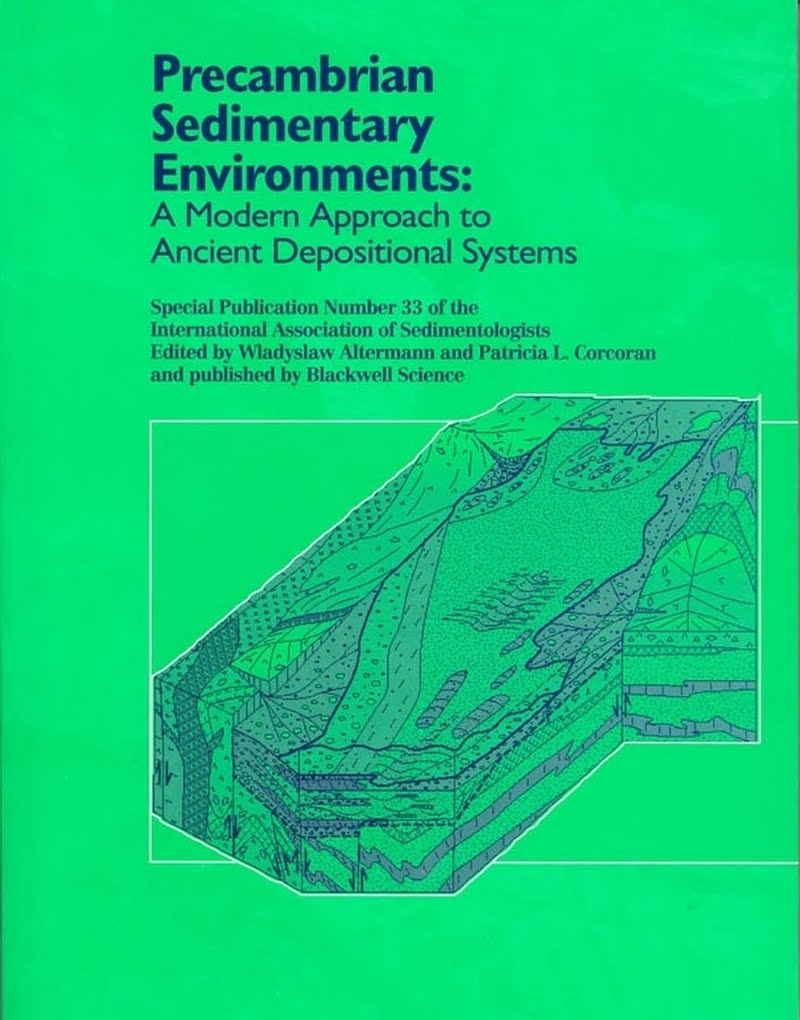
The motivation for this volume came from the idea that the Precambrian is the key, both to the present, and to the understanding of the Earth as a whole. The Precambrian constitutes about 85% of Earth's history, and of that, about 3.75 billion years of Precambrian time, represented by rocks, are accessible to geoscientists. Ancient atmospheric and environmental conditions can be traced back to the time when the Earth was only about 250 million years old. Precambrian rocks supply almost 75% of important mineral resources such as Fe, Mn, Au, Pt and Cr. Many of these elements are associated with sedimentary rocks and some important hydrocarbon, coal and graphite deposits are also hosted by Precambrian rocks. This volume is aimed at geoscientists interested in Precambrian sedimentary rocks and at students of Earth history. It contains review articles discussing Precambrian conditions and case studies from Precambrian shields and successions of North and South America, Australia, Africa, Europe, Asia and India. The introductory papers, written by experts on Precambrian environments, treat comprehensively the application of actualism to the Precambrian, the evolution and influence of life on the sedimentary rock record, the genesis of Banded Iron Formations, the Precambrian sulphur cycle and the significance of Precambrian chemical carbonate precipitates. The case studies include depositional settings and processes in Archean terranes, in Paleoproterozoic sequences, with some emphasis on the lack of vegetation and weathering, and in late Proterozoic sequences, with some emphasis on glacial deposits. The contributions demonstrate that Precambrian sedimentary deposits are commonly similar to their Phanerozoic counterparts in terms of composition, sedimentary processes, and depositional setting, but may differ significantly as a result of lack of vegetation, climatic and biological constraints, composition and circulation of seawater, and the secular involvement of continental crust. Contains review articles discussing Precambrian conditions and case studies from Precambrian shields and successions of North and South America, Australia, Africa, Europe, Asia and India. The introductory papers, written by experts on Precambrian environments, treat comprehensively the application of actualism to the Precambrian, the evolution and influence of life on the sedimentary rock record, the genesis of Banded Iron Formations, the Precambrian sulphur cycle and the significance of Precambrian chemical carbonate precipitates. Detailed case studies include depositional settings and processes in Archean terranes, in Paleoproterozoic sequences, with some emphasis on the lack of vegetation and weathering, and in late Proterozoic sequences, with some emphasis on glacial deposits. Written for geoscientists interested in Precambrian sedimentary rocks and students of Earth history. If you are a member of the International Association of Sedimentologists (IAS), for purchasing details, please see: http://www.iasnet.org/publications/details.asp?code=SP33