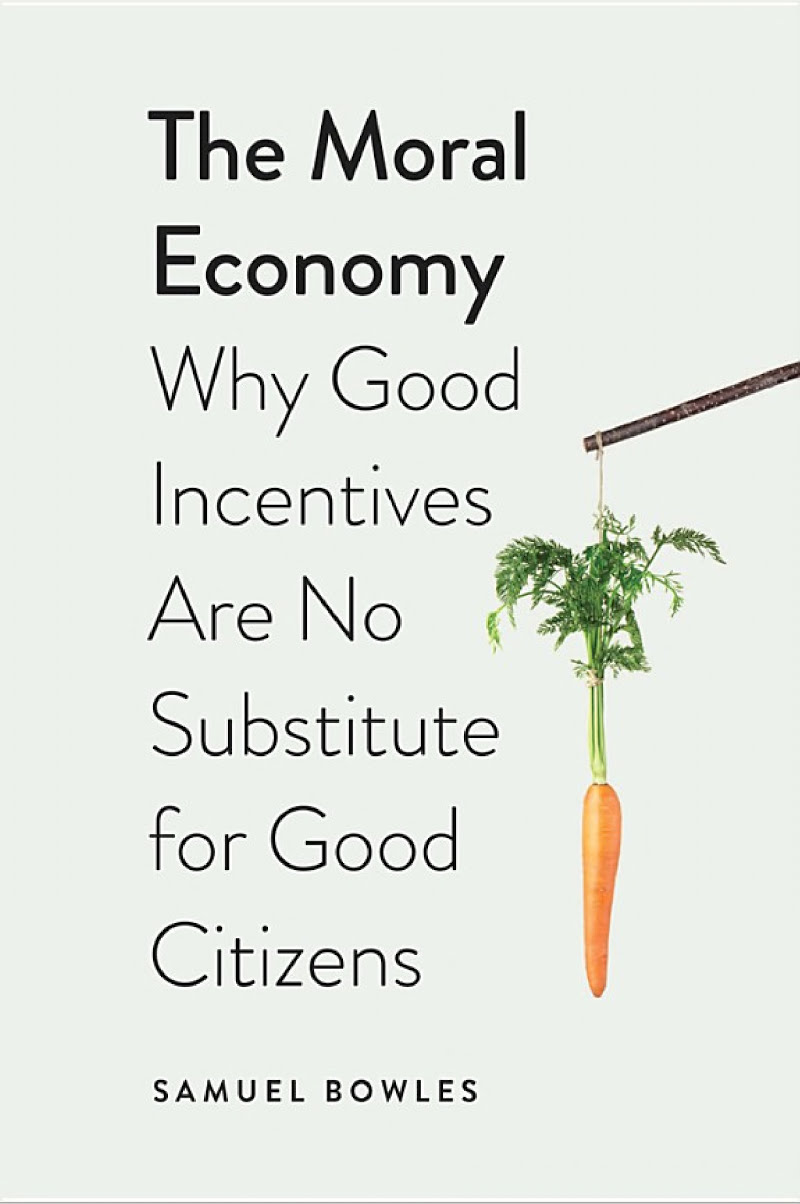
The Moral Economy
Why Good Incentives Are No Substitute for Good Citizens
by Samuel Bowles
288 pages· 2016· ISBN 9780300221084
About
Should the idea of economic man—the amoral and self-interested Homo economicus—determine how we expect people to respond to monetary rewards, punishments, and other incentives? Samuel Bowles answers with a resounding “no.” Policies that follow from this paradigm, he shows, may “crowd out” ethical and generous motives and thus backfire. But incentives per se are not really the culprit. Bowles shows that crowding out occurs when the message conveyed by fines and rewards is that self-interest is expected, that the employer thinks the workforce is lazy, or that the citizen cannot otherwise be trusted to contribute to the public good. Using historical and recent case studies as well as behavioral experiments, Bowles shows how well-designed incentives can crowd in the civic motives on which good governance depends.
Discuss The Moral Economy with other readers
Join or start a book club for The Moral Economy on Readfeed. Live chat, shared reading progress, and AI discussion questions — free to get started.
Frequently asked questions
How do I join a book club for The Moral Economy?
Sign up free on Readfeed, then browse public clubs or start your own club with The Moral Economy as the current read. Invite friends with a share link and discuss together with live chat and AI discussion questions.
Can I discuss The Moral Economy with other readers online?
Yes. Readfeed book clubs let you chat live, share progress, and join discussions about The Moral Economy with readers worldwide — whether your club is virtual, in-person, or hybrid.
Is Readfeed free?
Yes. Creating an account and joining book clubs is free. Sign up to find readers who love the same books and start discussing today.