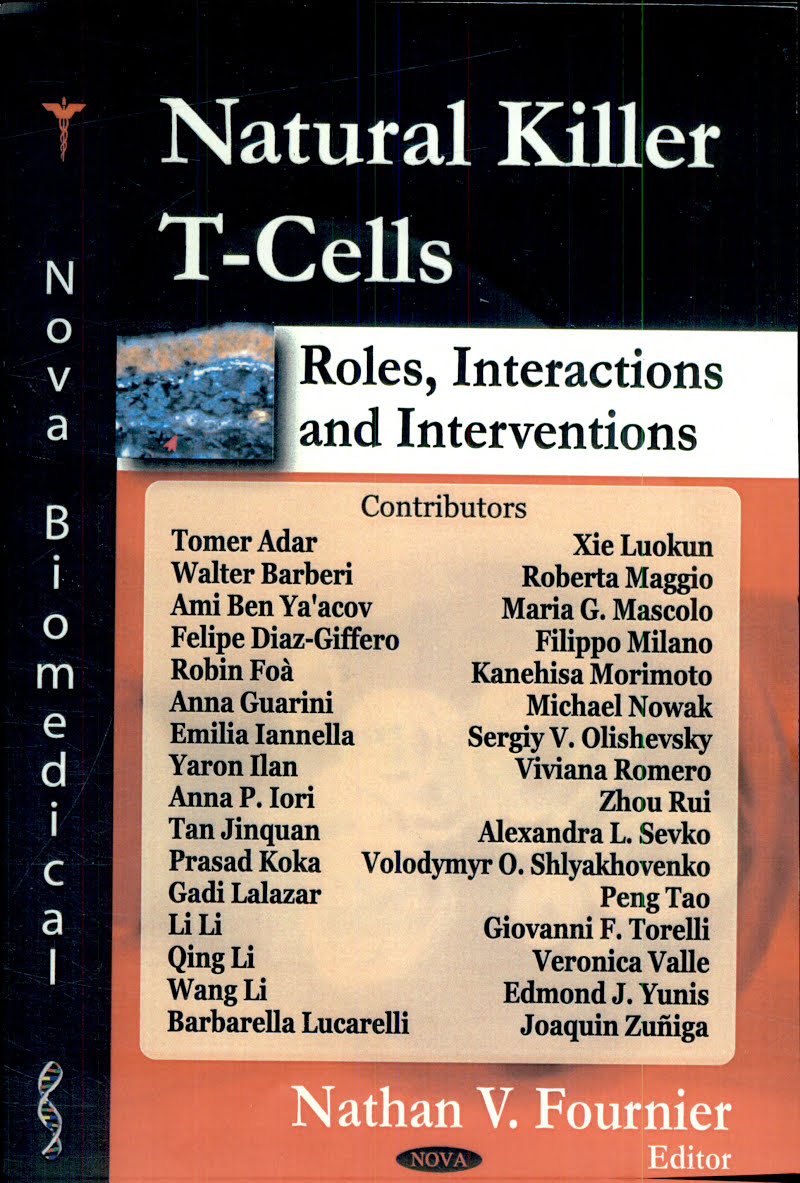
Natural Killer T-cells
Roles, Interactions, and Interventions
by Nathan V. Fournier
203 pages· 2008· ISBN 9781604562873
About
Natural killer T (NKT) cells are a heterogeneous group of T cells that share properties of both T cells and natural killer (NK) cells. Many of these cells recognize the non-polymorphic CD1d molecule, an antigen-presenting molecule that binds self- and foreign lipids and glycolipids. Upon activation, NK T cells are able to produce large quantities of interferon-gamma, IL-4, and granulocyte-macrophage colony-stimulating factor, as well as multiple other cytokines and chemokines (such as IL-2 and TNF-alpha). NKT cells seem to be essential for several aspects of immunity because their dysfunction or deficiency has been shown to lead to the development of autoimmune diseases (such as diabetes or atherosclerosis) and cancers. NKT cells have recently been implicated in the disease progression of human asthma. The clinical potential of NKT cells lies in the rapid release of cytokines (such as IL-2, IFN-gamma, TNF-alpha, and IL-4) that promote or suppress different immune responses.
Discuss Natural Killer T-cells with other readers
Join or start a book club for Natural Killer T-cells on Readfeed. Live chat, shared reading progress, and AI discussion questions — free to get started.
Frequently asked questions
How do I join a book club for Natural Killer T-cells?
Sign up free on Readfeed, then browse public clubs or start your own club with Natural Killer T-cells as the current read. Invite friends with a share link and discuss together with live chat and AI discussion questions.
Can I discuss Natural Killer T-cells with other readers online?
Yes. Readfeed book clubs let you chat live, share progress, and join discussions about Natural Killer T-cells with readers worldwide — whether your club is virtual, in-person, or hybrid.
Is Readfeed free?
Yes. Creating an account and joining book clubs is free. Sign up to find readers who love the same books and start discussing today.