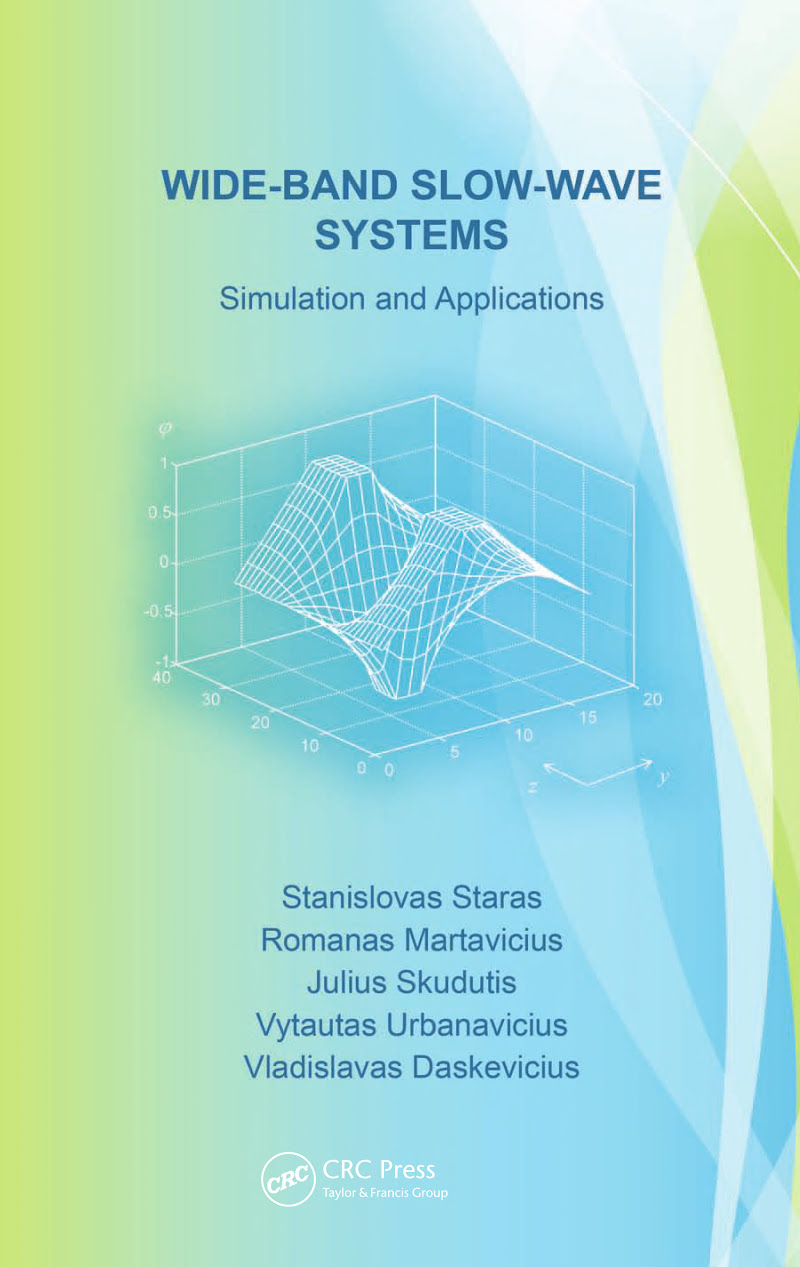
Wide-Band Slow-Wave Systems

Wide-Band Slow-Wave Systems

Simulation and Applications

by Stanislovas Staras, Romanas Martavicius, Julius Skudutis, Vytautas Urbanavicius, Vladislavas Daskevicius

460 pages· 2012· ISBN 9781439881552
About
The field of electromagnetics has seen considerable advances in recent years, based on the wide applications of numerical methods for investigating electromagnetic fields, microwaves, and other devices. Wide-Band Slow-Wave Systems: Simulation and Applications presents new technical solutions and research results for the analysis, synthesis, and design of slow-wave structures for modern electronic devices with super-wide pass-bands. It makes available, for the first time in English, significant research from the past 20 years that was previously published only in Russian and Lithuanian. The authors examine electrodynamics, multiconductor lines, and numerical methods for the modeling, simulation, analysis, and design of various super-wide-band slow-wave structures, including helical, meander, and gutter-type systems. The book features: The electrodynamic method for analysis of helical structures containing periodical inhomogeneities The multiconductor line method for analysis of complex helical, meander, and gutter-type wide-band slow-wave structures The method of moments for modeling and analysis of multiconductor lines containing a limited number of lines and meander structures with limited length Use of powerful software systems Microwave Office®, MICROWAVE STUDIO®, and MATLAB® for modeling, analysis, and design A synergy of various methods for investigating and designing wide-band slow-wave structures Solution of specific problems related to the design of wide-band and super-wide-band electrodynamic delay and deflection systems Principles of computer-aided design of slow-wave structures Presenting the theory, principles, properties, and applications of wide-band and super-wide-band slow-wave structures, this book will be of interest to students, engineers, researchers, and designers in the fields of electronic and microwave engineering.

Discuss Wide-Band Slow-Wave Systems with other readers

Join or start a book club for Wide-Band Slow-Wave Systems on Readfeed. Live chat, shared reading progress, and AI discussion questions — free to get started.

Frequently asked questions

How do I join a book club for Wide-Band Slow-Wave Systems?

Sign up free on Readfeed, then browse public clubs or start your own club with Wide-Band Slow-Wave Systems as the current read. Invite friends with a share link and discuss together with live chat and AI discussion questions.

Can I discuss Wide-Band Slow-Wave Systems with other readers online?

Yes. Readfeed book clubs let you chat live, share progress, and join discussions about Wide-Band Slow-Wave Systems with readers worldwide — whether your club is virtual, in-person, or hybrid.

Is Readfeed free?

Yes. Creating an account and joining book clubs is free. Sign up to find readers who love the same books and start discussing today.