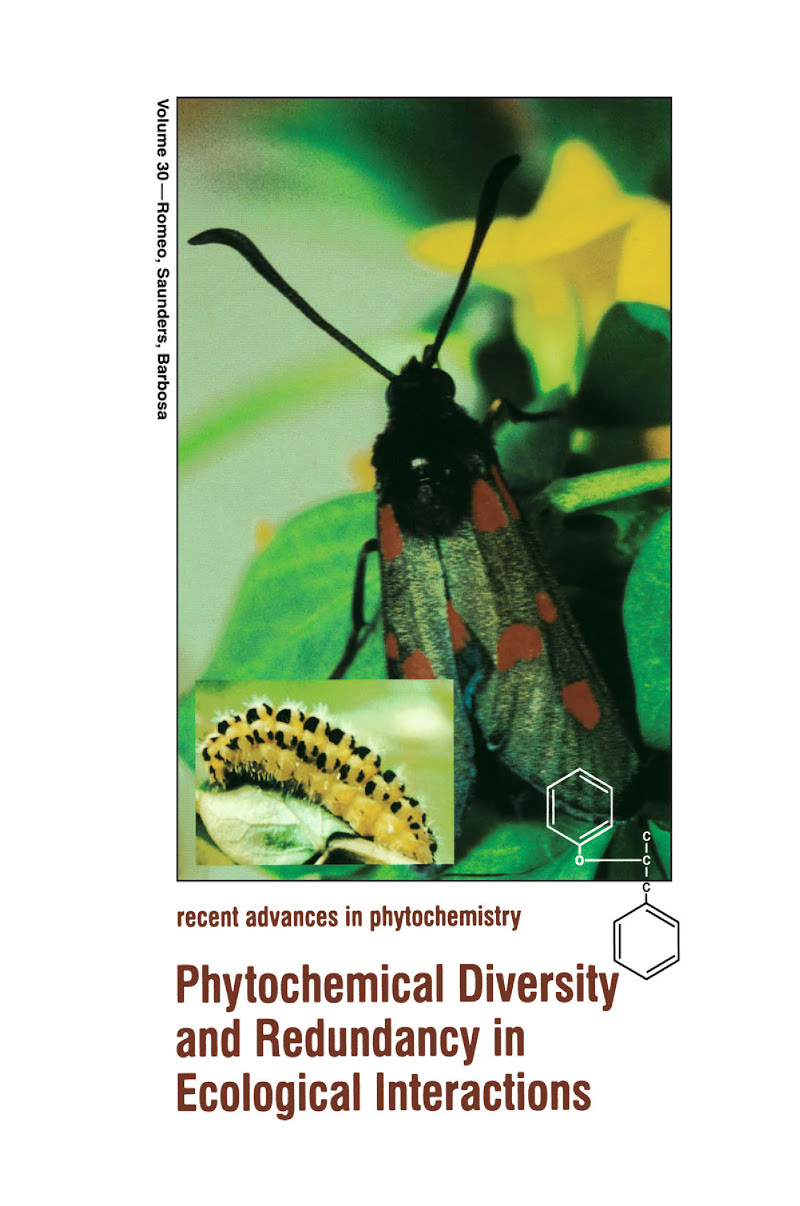
Phytochemical Diversity and Redundancy in Ecological Interactions

Phytochemical Diversity and Redundancy in Ecological Interactions

by Pedro Barbosa, John T. Romeo, James A. Saunders

319 pages· 2013· ISBN 9781489917546
About
Diversity within and among living organisms is both a biological impera tive and a biological conundrum. Phenotypic and genotypic diversity is the critical currency ofecological interactions and the evolution of life. Thus, it is not unexpected to find vast phytochemical diversity among plants. However, among the most compelling questions which arise among those interested in ecological phytochemistry is the extent, nature, and reasons for the diversity of chemieals in plants. The idea that natural products (secondary metabolites) are accidents of metabolism and have no biological function is an old one which has resurfaced recently under a new term "redundancy. " Redundancy in the broader sense can be viewed as duplication of effort. The co-occurrence of several classes of phytochemieals in a given plant may be redundancy. Is there unnecessary duplication of chemical defense systems and ifso, why? What selective forces have produced this result? On the other hand, why does the same compound often have multiple functions? At a symposium of the Phytochemical Society of North America held in August 1995, in Sault Ste. Marie, Ontario, Canada, the topic "Phytochernical Redundancy in Ecological Interactions" was discussed. The chapters in this volume are based on that symposium. They both stimulate thought and provide some working hypotheses for future research. It is being increasingly recognized that functional diversity and multiplicity of function of natural products is the norm rather than the exception.

Discuss Phytochemical Diversity and Redundancy in Ecological Interactions with other readers

Join or start a book club for Phytochemical Diversity and Redundancy in Ecological Interactions on Readfeed. Live chat, shared reading progress, and AI discussion questions — free to get started.

Frequently asked questions

How do I join a book club for Phytochemical Diversity and Redundancy in Ecological Interactions?

Sign up free on Readfeed, then browse public clubs or start your own club with Phytochemical Diversity and Redundancy in Ecological Interactions as the current read. Invite friends with a share link and discuss together with live chat and AI discussion questions.

Can I discuss Phytochemical Diversity and Redundancy in Ecological Interactions with other readers online?

Yes. Readfeed book clubs let you chat live, share progress, and join discussions about Phytochemical Diversity and Redundancy in Ecological Interactions with readers worldwide — whether your club is virtual, in-person, or hybrid.

Is Readfeed free?

Yes. Creating an account and joining book clubs is free. Sign up to find readers who love the same books and start discussing today.