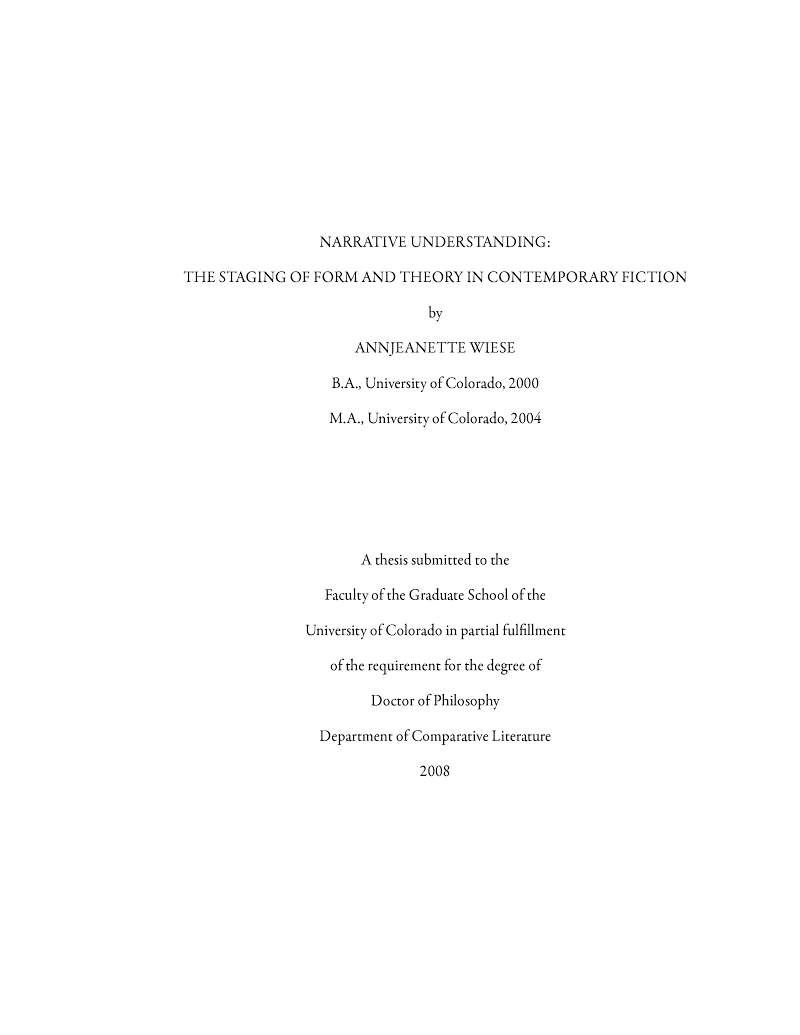
Narrative Understanding: The Staging of Form and Theory in Contemporary Fiction

Narrative Understanding: The Staging of Form and Theory in Contemporary Fiction

284 pages· 2008· ISBN 9780549508380
About
In the past several decades, we have witnessed a proliferation of theories about the postmodern condition, and it has become increasingly apparent that one dominant characteristic of these theories is a preoccupation with narrative. It is therefore not surprising that theorists and fiction writers alike have turned to narrative theory to interpret cultural postmodernity in general, even if much of that culture produces new modes of perceiving that contradict traditions of narrative form. It is my contention that the conditions that result from this critical and theoretical interconnectedness have fueled the manipulations at play in recent fiction, in which authors stage conventions in order to parse the ways form can shape experience and perception. What is therefore at issue here is fiction's representation of how narrative structures and gives meaning to experience and what the consequences of this are in relation to the rest of the postmodern condition. In my first chapter I examine the implications of how narratology has defined narrative in ways that have generated the staging of narrative as a concept and as a set of formal conventions in fiction. My second chapter explores the conditions of postmodernity that make us particularly susceptible to and self-conscious of the inclination toward narrative form in how we make sense of our world. In chapters three through seven, I analyze a selection of exemplary novels that not only present conceptually but also enact formally their positions on narrative as a problematic issue in contemporary culture. In each of these chapters, I will emphasize thematics such as history, technology, identity, and the representation of reality, all of which function in relation to the staging of narrative in varying ways. My selection of novels includes Ragtime by E. L. Doctorow, Television by Jean-Philippe Toussaint, White Noise by Don DeLillo, The Infernal Desire Machines of Doctor Hoffman by Angela Carter, Pinocchio in Venice by Robert Coover, and The Notebook, The Proof, and The Third Lie by Agota Kristof.

Discuss Narrative Understanding: The Staging of Form and Theory in Contemporary Fiction with other readers

Join or start a book club for Narrative Understanding: The Staging of Form and Theory in Contemporary Fiction on Readfeed. Live chat, shared reading progress, and AI discussion questions — free to get started.

Frequently asked questions

How do I join a book club for Narrative Understanding: The Staging of Form and Theory in Contemporary Fiction?

Sign up free on Readfeed, then browse public clubs or start your own club with Narrative Understanding: The Staging of Form and Theory in Contemporary Fiction as the current read. Invite friends with a share link and discuss together with live chat and AI discussion questions.

Can I discuss Narrative Understanding: The Staging of Form and Theory in Contemporary Fiction with other readers online?

Yes. Readfeed book clubs let you chat live, share progress, and join discussions about Narrative Understanding: The Staging of Form and Theory in Contemporary Fiction with readers worldwide — whether your club is virtual, in-person, or hybrid.

Is Readfeed free?

Yes. Creating an account and joining book clubs is free. Sign up to find readers who love the same books and start discussing today.