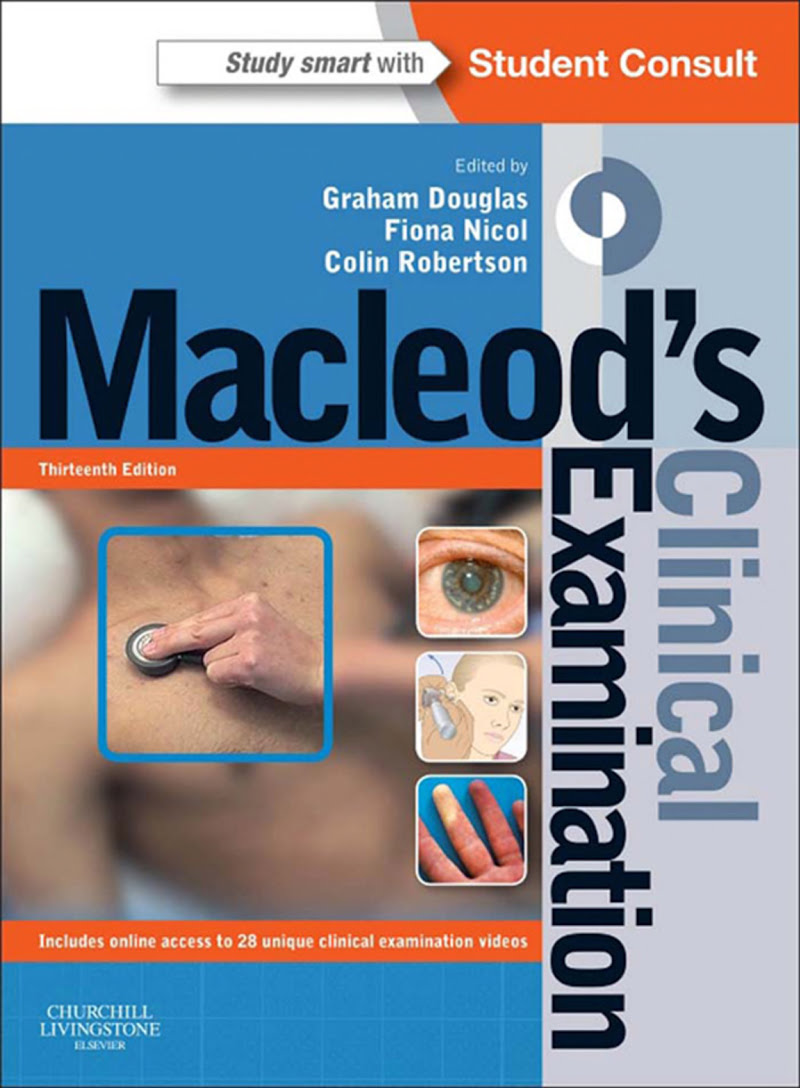
Macleod's Clinical Examination

Macleod's Clinical Examination

by Colin Robertson, Graham Douglas, Fiona Nicol

472 pages· 2013· ISBN 9780702053375
About
This classic textbook sets out clearly and concisely how to evaluate symptoms and elicit relevant physical signs. It describes the practical skills which every clinician must acquire and develop in order to evolve diagnostic procedures and management strategies and plans. ‘Highly Commended’ in the 2006 and 2010 BMA Medical Book Competitions, this Thirteenth Edition contains over 500 clinical photographs and diagrams to illustrate the text, with new topics added to make the book even more comprehensive. This Thirteenth Edition has four sections: History taking and general examination. System examination covering symptoms and signs. Examination in special situations including babies & children and the critically ill. How to pass an OSCE. Included on the Student Consult site are the specially-recorded videos demonstrating many of the clinical examination routines described in the main text. The book starts with a general overview section on history taking and the general examination that provide the framework on which to hang the detail. The systematic examination section documents clearly the relevant history, examination and special investigations as well as giving advice on their significance. The third section covers examination in specific situations and emphasises an integrated and structured approach to these patients. A final section spells out how to demonstrate the techniques learned in the book in an OSCE. Macleod’s is closely linked to its sister publication, Davidson’s Principles & Practice of Medicine, which complements the information in this text. Available with full online access on Student Consult and ancillary videos demonstrating key clinical examination routines following the format laid out in the book. There are two new chapters on examination in specific situations: The frail elderly The adult with fever A new section explicitly spells out how to demonstrate the techniques learned in the book in an OSCE and other formative and summative examinations. Over 50 new text boxes highlight the evidence-base for the examination techniques discussed. An Advisory Board of students, junior doctors, and representatives from the nursing, ambulance, Primary Care and academic communities from six countries has made detailed comments and critically appraised the entire book. The text has been substantially rewritten with more on medically unexplained symptoms in the History Taking chapter and extended coverage of diabetes mellitus in the Endocrine System chapter. Integrated with the online text are clinical examination videos of trained professionals performing many of the examination routines described in the book with an accompanying commentary by the Editor, Professor Colin Robertson Two new videos show how the Glasgow Coma Scale should be performed in clinical situations, demonstrating the correct techniques and also common pitfalls in using the GCS.

Discuss Macleod's Clinical Examination with other readers

Join or start a book club for Macleod's Clinical Examination on Readfeed. Live chat, shared reading progress, and AI discussion questions — free to get started.

Frequently asked questions

How do I join a book club for Macleod's Clinical Examination?

Sign up free on Readfeed, then browse public clubs or start your own club with Macleod's Clinical Examination as the current read. Invite friends with a share link and discuss together with live chat and AI discussion questions.

Can I discuss Macleod's Clinical Examination with other readers online?

Yes. Readfeed book clubs let you chat live, share progress, and join discussions about Macleod's Clinical Examination with readers worldwide — whether your club is virtual, in-person, or hybrid.

Is Readfeed free?

Yes. Creating an account and joining book clubs is free. Sign up to find readers who love the same books and start discussing today.