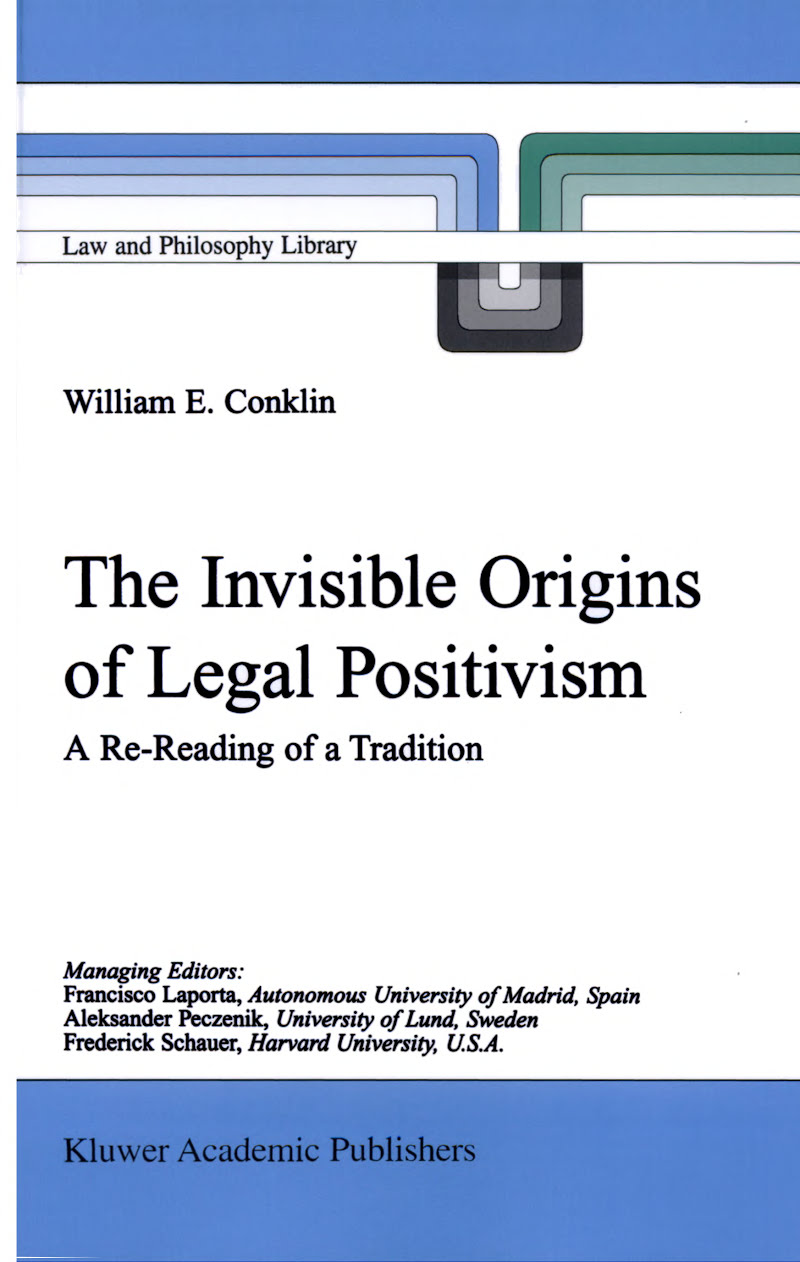
The Invisible Origins of Legal Positivism

The Invisible Origins of Legal Positivism

A Re-Reading of a Tradition

by W.E. Conklin

350 pages· 2001· ISBN 9781402002823
About
Conklin's thesis is that the tradition of modern legal positivism, beginning with Thomas Hobbes, postulated different senses of the invisible as the authorising origin of humanly posited laws. Conklin re-reads the tradition by privileging how the canons share a particular understanding of legal language as written. Leading philosophers who have espoused the tenets of the tradition have assumed that legal language is written and that the authorising origin of humanly posited rules/norms is inaccessible to the written legal language. Conklin's re-reading of the tradition teases out how each of these leading philosophers has postulated that the authorising origin of humanly posited laws is an unanalysable externality to the written language of the legal structure. As such, the authorising origin of posited rules/norms is inaccessible or invisible to their written language. What is this authorising origin? Different forms include an originary author, an a priori concept, and an immediacy of bonding between person and laws. In each case the origin is unwritten in the sense of being inaccessible to the authoritative texts written by the officials of civil institutions of the sovereign state. Conklin sets his thesis in the context of the legal theory of the polis and the pre-polis of Greek tribes. The author claims that the problem is that the tradition of legal positivism of a modern sovereign state excises the experiential, or bodily, meanings from the written language of the posited rules/norms, thereby forgetting the very pre-legal authorising origin of the posited norms that each philosopher admits as offering the finality that legal reasoning demands if it is to be authoritative.

Discuss The Invisible Origins of Legal Positivism with other readers

Join or start a book club for The Invisible Origins of Legal Positivism on Readfeed. Live chat, shared reading progress, and AI discussion questions — free to get started.

Frequently asked questions

How do I join a book club for The Invisible Origins of Legal Positivism?

Sign up free on Readfeed, then browse public clubs or start your own club with The Invisible Origins of Legal Positivism as the current read. Invite friends with a share link and discuss together with live chat and AI discussion questions.

Can I discuss The Invisible Origins of Legal Positivism with other readers online?

Yes. Readfeed book clubs let you chat live, share progress, and join discussions about The Invisible Origins of Legal Positivism with readers worldwide — whether your club is virtual, in-person, or hybrid.

Is Readfeed free?

Yes. Creating an account and joining book clubs is free. Sign up to find readers who love the same books and start discussing today.