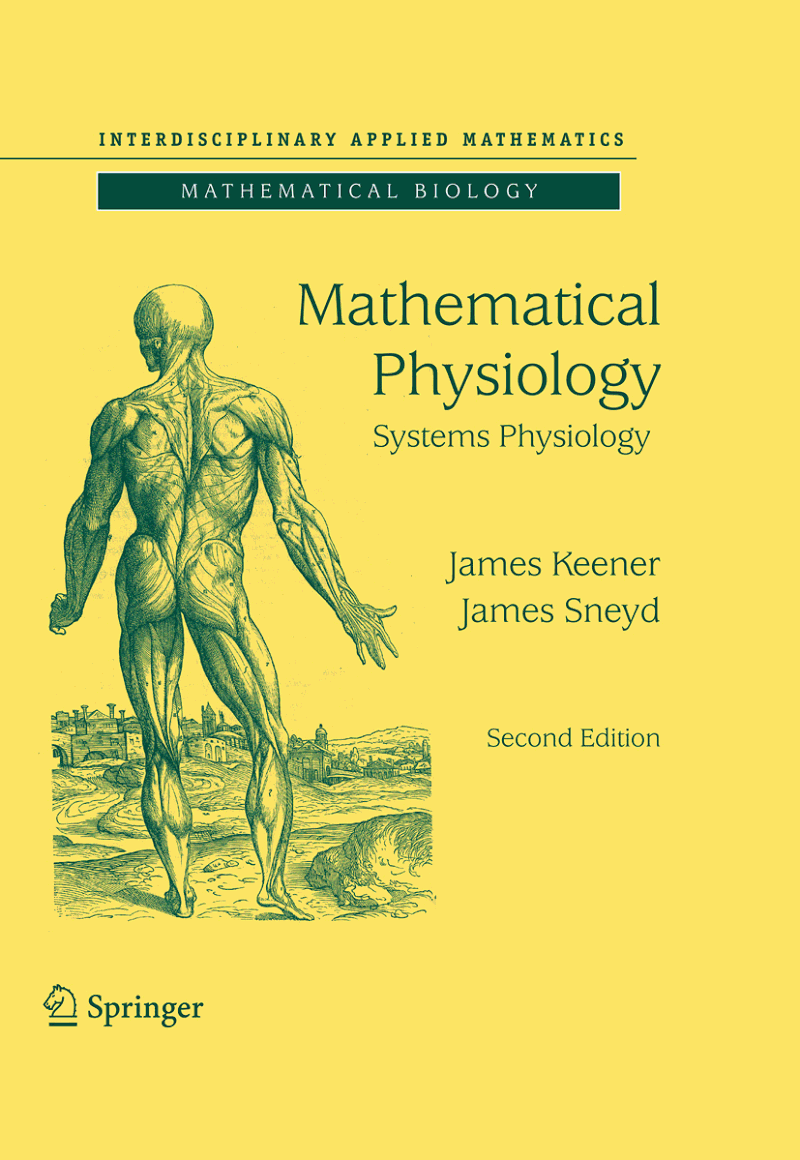
Mathematical Physiology
I: Cellular Physiology
by James Keener, James Sneyd
547 pages· 2008· ISBN 9780387758466
About
Divided into two volumes, the book begins with a pedagogical presentation of some of the basic theory, with chapters on biochemical reactions, diffusion, excitability, wave propagation and cellular homeostasis. The second, more extensive part discusses particular physiological systems, with chapters on calcium dynamics, bursting oscillations and secretion, cardiac cells, muscles, intercellular communication, the circulatory system, the immune system, wound healing, the respiratory system, the visual system, hormone physiology, renal physiology, digestion, the visual system and hearing. New chapters on Calcium Dynamics, Neuroendocrine Cells and Regulation of Cell Function have been included. Reviews from first edition: Keener and Sneyd's Mathematical Physiology is the first comprehensive text of its kind that deals exclusively with the interplay between mathematics and physiology. Writing a book like this is an audacious act! -Society of Mathematical Biology Keener and Sneyd's is unique in that it attempts to present one of the most important subfields of biology and medicine, physiology, in terms of mathematical "language", rather than organizing materials around mathematical methodology. -SIAM review
Discuss Mathematical Physiology with other readers
Join or start a book club for Mathematical Physiology on Readfeed. Live chat, shared reading progress, and AI discussion questions — free to get started.
Frequently asked questions
How do I join a book club for Mathematical Physiology?
Sign up free on Readfeed, then browse public clubs or start your own club with Mathematical Physiology as the current read. Invite friends with a share link and discuss together with live chat and AI discussion questions.
Can I discuss Mathematical Physiology with other readers online?
Yes. Readfeed book clubs let you chat live, share progress, and join discussions about Mathematical Physiology with readers worldwide — whether your club is virtual, in-person, or hybrid.
Is Readfeed free?
Yes. Creating an account and joining book clubs is free. Sign up to find readers who love the same books and start discussing today.