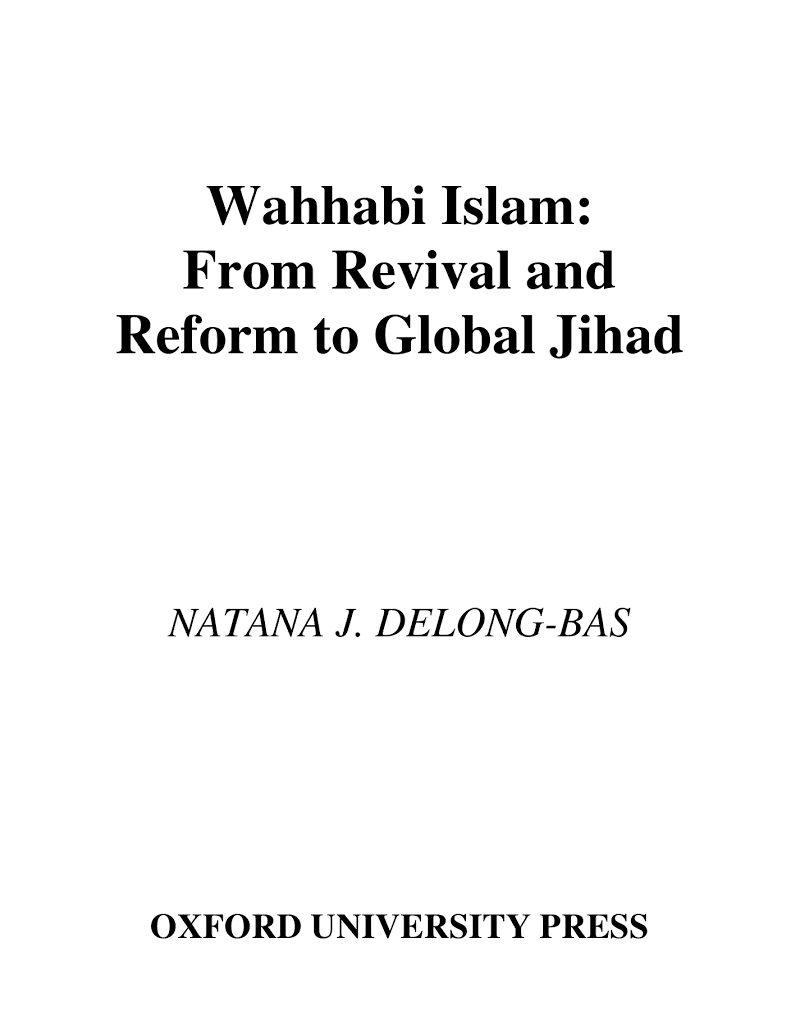
Wahhabi Islam
From Revival and Reform to Global Jihad
by Natana J. DeLong-Bas
384 pages· 2008· ISBN 9780199715619
About
Before 9/11, few Westerners had heard of Wahhabism. Today, it is a household word. Frequently mentioned in association with Osama bin Laden, Wahhabism is portrayed by the media and public officials as an intolerant, puritanical, militant interpretation of Islam that calls for the wholesale destruction of the West in a jihad of global proportions. In the first study ever undertaken of the writings of Wahhabism's founder, Muhammad Ibn Abd al-Wahhab (1702-1791), Natana DeLong-Bas shatters these stereotypes and misconceptions. Her reading of Ibn Abd al-Wahhab's works produces a revisionist thesis: Ibn Abd al-Wahhab was not the godfather of contemporary terrorist movements. Rather, he was a voice of reform, reflecting mainstream 18th-century Islamic thought. His vision of Islamic society was based upon a monotheism in which Muslims, Christians and Jews were to enjoy peaceful co-existence and cooperative commercial and treaty relations. Eschewing medieval interpretations of the Quran and hadith (sayings and deeds of the prophet Muhammad), Ibn Abd al-Wahhab called for direct, historically contextualized interpretation of scripture by both women and men. His understanding of theology and Islamic law was rooted in Quranic values, rather than literal interpretations. A strong proponent of women's rights, he called for a balance of rights between women and men both within marriage and in access to education and public space. In the most comprehensive study of Ibn Abd al-Wahhab's interpretation of jihad ever written, DeLong-Bas details a vision in which jihad is strictly limited to the self-defense of the Muslim community against military aggression. Contemporary extremists like Osama bin Laden do not have their origins in Wahhabism, she shows. The hallmark jihadi focus on a cult of martyrdom, the strict division of the world into two necessarily opposing spheres, the wholescale destruction of both civilian life and property, and the call for global jihad are entirely absent from Ibn Abd al-Wahhab's writings. Instead, the militant stance of contemporary jihadism lies in adherence to the writings of the medieval scholar, Ibn Taymiyya, and the 20th century Egyptian radical, Sayyid Qutb. This pathbreaking book fills an enormous gap in the literature about Wahhabism by returning to the original writings of its founder. Bound to be controversial, it will be impossible to ignore.
Discuss Wahhabi Islam with other readers
Join or start a book club for Wahhabi Islam on Readfeed. Live chat, shared reading progress, and AI discussion questions — free to get started.
Frequently asked questions
How do I join a book club for Wahhabi Islam?
Sign up free on Readfeed, then browse public clubs or start your own club with Wahhabi Islam as the current read. Invite friends with a share link and discuss together with live chat and AI discussion questions.
Can I discuss Wahhabi Islam with other readers online?
Yes. Readfeed book clubs let you chat live, share progress, and join discussions about Wahhabi Islam with readers worldwide — whether your club is virtual, in-person, or hybrid.
Is Readfeed free?
Yes. Creating an account and joining book clubs is free. Sign up to find readers who love the same books and start discussing today.