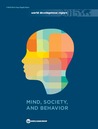
World Development Report 2015: Mind, Society and Behavior

World Development Report 2015: Mind, Society and Behavior

by World Bank Group

216 pages· 2014· ISBN 9781464803437
About
Every policy relies on explicit or implicit assumptions about how people make choices. Those assumptions typically rest on an idealized model of how people think, rather than an understanding of how everyday thinking actually works. This year s World Development Report argues that a more realistic account of decision-making and behavior will make development policy more effective. The Report emphasizes what it calls the three marks of everyday thinking. In everyday thinking, people use intuition much more than careful analysis. They employ concepts and tools that prior experience in their cultural world has made familiar. And social emotions and social norms motivate much of what they do. These insights together explain the extraordinary persistence of some social practices, and rapid change in others. They also offer new targets for development policy. A richer understanding of why people save, use preventive health care, work hard, learn, and conserve energy provides a basis for innovative and inexpensive interventions. The insights reveal that poverty not only deprives people of resources but is an environment that shapes decision making, a fact that development projects across the board need to recognize. The insights show that the psychological foundations of decision making emerge at a young age and require social support. The Report applies insights from modern behavioral and social sciences to development policies for addressing poverty, finance, productivity, health, children, and climate change. It demonstrates that new policy ideas based on a richer view of decision-making can yield high economic returns. These new policy targets include: the choice architecture (for example, the default option) the scope for social rewards frames that influence whether or not a norm is activated information in the form of rules of thumb opportunities for experiences that change mental models or social norms Finally, the Report shows that small changes in context have large effects on behavior. As a result, discovering which interventions are most effective, and with which contexts and populations, inherently requires an experimental approach. Rigor is needed for testing the processes for delivering interventions, not just the products that are delivered."

Discuss World Development Report 2015: Mind, Society and Behavior with other readers

Join or start a book club for World Development Report 2015: Mind, Society and Behavior on Readfeed. Live chat, shared reading progress, and AI discussion questions — free to get started.

Frequently asked questions

How do I join a book club for World Development Report 2015: Mind, Society and Behavior?

Sign up free on Readfeed, then browse public clubs or start your own club with World Development Report 2015: Mind, Society and Behavior as the current read. Invite friends with a share link and discuss together with live chat and AI discussion questions.

Can I discuss World Development Report 2015: Mind, Society and Behavior with other readers online?

Yes. Readfeed book clubs let you chat live, share progress, and join discussions about World Development Report 2015: Mind, Society and Behavior with readers worldwide — whether your club is virtual, in-person, or hybrid.

Is Readfeed free?

Yes. Creating an account and joining book clubs is free. Sign up to find readers who love the same books and start discussing today.