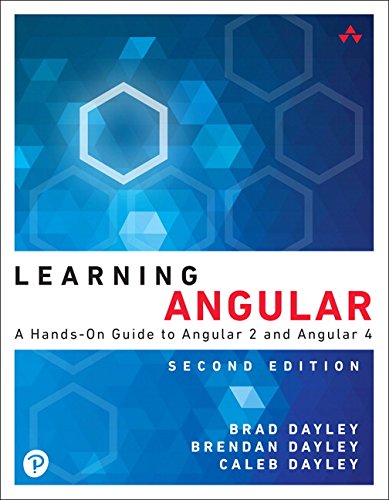
Learning Angular: A Hands-On Guide to Angular 2 and Angular 4 (2nd Edition)
by Brad Dayley, Brendan Dayley, Caleb Dayley
Learning Angular, Second Edition
A Hands-On Guide to Angular 2 and Angular 4
Learning Angular teaches modern application development with Angular 2 and Angular 4. It begins with the basics of Angular and the technologies and techniques used throughout the book, such as key features of TypeScript, newer ES6 syntax and concepts, and details about the tools needed to write professional Angular applications.
The reader will next build an Angular application from scratch while learning about the primary pieces of an Angular application and see how they work together. Using lots of examples, the core parts of Angular will be introduced, such as Components, the Router, and Services.
The book also covers techniques like server-side rendering and how to incrementally add Angular 2+ features to existing AngularJS applications. Finally, the reader will gain insight into advanced skills that should be part of any professional Angular developer’s toolkit such as testing, tooling options, and performance tuning.
- Understand how Angular is organized and learn best practices for designing Angular applications
- Quickly build Angular templates with built-in directives that enhance the user experience
- Bind UI elements to your data model, so changes to your model and UI occur automatically in tandem
- Define custom Angular directives that extend HTML
- Implement zoomable images, expandable lists, and other rich UI components
- Implement client-side services that interact with web servers
- Build dynamic browser views to provide even richer user interaction
- Create custom services you can easily reuse
- Implement rich UI components as custom Angular directives
Contents at a Glance
Introduction
- What is Angular
- Why Use Angular
- Who this Book is For
- How to Use this Book
- Getting the Source Code
Chapter 1: Jumping into JavaScript
- Setting Up a JavaScript Development Environment
- Defining Variables
- Understanding JavaScript Data Types
- Using Operators
- Implementing Looping
- Creating Functions
- Understanding Variable Scope
- Using JavaScript Objects
- Manipulating Strings
- Working with Arrays
- Adding Error Handling
Chapter 2: Jumping into TypeScript
- Learning the Different Types
- Understanding Interfaces
- Implementing Classes
- Implementing Modules
- Understanding Functions
Chapter 3: Getting Started with Angular
- Why Angular?
- Understanding Angular
- Separation of Responsibilities
- Adding Angular to Your Environment
- Using the Angular CLI
- Creating a Basic Angular Application
Chapter 4: Angular Components
- Component Configuration
- Building the Template
- Using Constructors
- Using External Templates
- Implementing Directives
Chapter 5: Expressions
- Using Expressions
- Using Pipes
- Building a Custom Pipe
Chapter 6: Data Binding
- Understanding Data Binding
- Interpolation
- Property Binding
- Attribute Binding
- Class Binding
- Style Binding
- Event Binding
- Two-Way Binding
Chapter 7: Built-in Directives
- Understanding Directives
- Using Built-in Directives
- Structural Directives
- Attribute Directives
Chapter 8: Custom Directives
- Creating a Custom Attribute Directive
- Creating a Custom Directive with a Component
Chapter 9: Events and Change Detection
- Using Browser Events
- Emitting Custom Events
- Using Observables
Chapter 10: Implementing Angular Services in Web Applications
- Understanding Angular Services
- Using the Built in Services
- Sending HTTP GET and PUT Requests with the http Service
- Implementing a Simple Mock Server Using the http Service
- Changing Views with the router Service
- Implementing a Router with a Navigation Bar
- Implementing a Router with Parameters
Chapter 11: Creating Your Own Custom Angular Service
- Integrating Custom Services into Angular Applications
- Implementing a Simple Application That Uses a Constant Data Service
- Implementing a Data Transform Service
- Implementing a Variable Data Service
- Implementing a Service that Returns a Promise
- Implementing a Shared Service
Chapter 12: Having Fun with Angular
- Implementing an Angular Application That Uses the Animation Service
- Implementing an Angular Application That Zooms in on Images
- Implementing an Angular Application That Enables Drag and Drop
- Implementing a Star Rating Angular Component
Discuss Learning Angular: A Hands-On Guide to Angular 2 and Angular 4 (2nd Edition) with other readers
Join or start a book club for Learning Angular: A Hands-On Guide to Angular 2 and Angular 4 (2nd Edition) on Readfeed. Live chat, shared reading progress, and AI discussion questions — free to get started.
Frequently asked questions
How do I join a book club for Learning Angular: A Hands-On Guide to Angular 2 and Angular 4 (2nd Edition)?
Sign up free on Readfeed, then browse public clubs or start your own club with Learning Angular: A Hands-On Guide to Angular 2 and Angular 4 (2nd Edition) as the current read. Invite friends with a share link and discuss together with live chat and AI discussion questions.
Can I discuss Learning Angular: A Hands-On Guide to Angular 2 and Angular 4 (2nd Edition) with other readers online?
Yes. Readfeed book clubs let you chat live, share progress, and join discussions about Learning Angular: A Hands-On Guide to Angular 2 and Angular 4 (2nd Edition) with readers worldwide — whether your club is virtual, in-person, or hybrid.
Is Readfeed free?
Yes. Creating an account and joining book clubs is free. Sign up to find readers who love the same books and start discussing today.