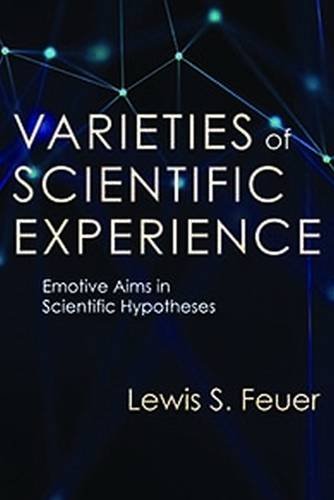
Varieties of Scientific Experience: Emotive Aims in Scientific Hypotheses
by Lewis S. Feuer
In a remarkable summary of more than forty years of work in the sociology and philosophy of science, Lewis S. Feuer reviews major people and landmarks in the evolution of modern science, giving readers a sense of the human drama involved in the creative process.
Examining the standpoints of philosophical figures ranging from Spinoza, Descartes, Kant, and Mill to more contemporary figures such as Einstein, Lovejoy, and Hook, Feuer illuminates how sociological antipathies project themselves into scientific divergences. This is no dry-as-dust exercise. Rather, Feuer delves into emotive beliefs such as pacifism, socialism, and anti-Semitism, which are not only behind the formation of concurrent worldviews, but are often fixations of scientific belief. He shows how scientists try to impose structural laws on the world that, besides fitting physical realities, will also realize their own emotional longings among alternative worldviews. He also shows that the gestation of the hypotheses of original-minded scientists, such as Darwin, Einstein, or Bohr, is in large part a subconscious process.
Writing with verve and style, Feuer conveys his own sense of the torments and the triumphs of science—even the crucial verification in 1919 that Einstein’s theorizing took place on an island where once unspeakable cruelties had been visited upon thousands of small Jewish children. The volume suggests how somber backgrounds of scientific discovery may have been omitted for the more generic view of science and scientists as imbued only with a liberal spirit.
Discuss Varieties of Scientific Experience: Emotive Aims in Scientific Hypotheses with other readers
Join or start a book club for Varieties of Scientific Experience: Emotive Aims in Scientific Hypotheses on Readfeed. Live chat, shared reading progress, and AI discussion questions — free to get started.
Frequently asked questions
How do I join a book club for Varieties of Scientific Experience: Emotive Aims in Scientific Hypotheses?
Sign up free on Readfeed, then browse public clubs or start your own club with Varieties of Scientific Experience: Emotive Aims in Scientific Hypotheses as the current read. Invite friends with a share link and discuss together with live chat and AI discussion questions.
Can I discuss Varieties of Scientific Experience: Emotive Aims in Scientific Hypotheses with other readers online?
Yes. Readfeed book clubs let you chat live, share progress, and join discussions about Varieties of Scientific Experience: Emotive Aims in Scientific Hypotheses with readers worldwide — whether your club is virtual, in-person, or hybrid.
Is Readfeed free?
Yes. Creating an account and joining book clubs is free. Sign up to find readers who love the same books and start discussing today.