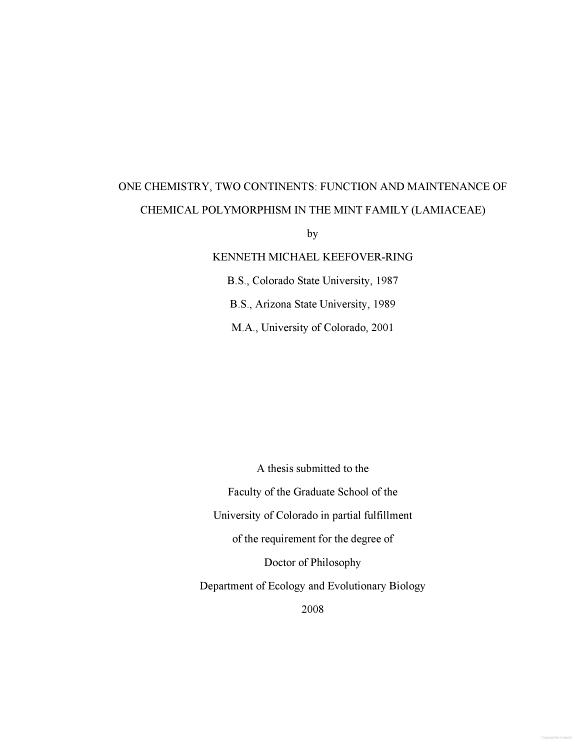
One Chemistry, Two Continents: Function and Maintenance of Chemical Polymorphism in the Mint Family (Lamiaceae).

One Chemistry, Two Continents: Function and Maintenance of Chemical Polymorphism in the Mint Family (Lamiaceae).

220 pages· 2008· ISBN 9780549508878
About
My dissertation work used two labiate species with similar monoterpene polymorphisms, Thymus vulgaris and Monarda fistulosa, to investigate patterns and processes associated with chemical variability. I described a 1,8-cineole chemotype in T. vulgaris , new to southern France. I explored the influences of thyme's essential oil polymorphism on its pollination biology by characterizing volatiles, and conducting floral visitation and seed set experiments. Chemotypes varied substantially in foliar volatiles, but less in floral compounds. Hermaphrodites produced more volatiles than females. In common garden floral visitation trials, honey bees showed strong chemotype preferences. At natural sites, honey bee and fly visits varied among plots, but neither showed the chemotype preferences that beetles did. Seed set was low and varied among plots, but not among chemotypes. Honey bee visitation rates showed a significant positive correlation with seeds per calyx. Populations of Monarda fistulosa consisted of mostly carvacrol and thymol plants, but geraniol individuals and a chemotype new to this species, containing linalool, were also found. M. fistulosa chemistry varied with respect to chemotype, plant tissue, and ontogeny. Comparing M. fistulosa herbarium samples, up to 125 years old, with present populations indicated little change in chemotype frequencies. The specialist beetle Physonota unipunctata drastically reduced M. fistulosa fitness, regardless of plant chemotype. Larvae showed slightly higher survival on thymol plants in the field and higher growth rates when originating from thymol natal plants. Larval fecal shield and host plant chemistry differed, with more high volatility compounds in shields. Plant volatiles triggered by herbivory differed from control plants due to a large increase from larval feeding. These results demonstrate the function and maintenance of chemical polymorphism in the Lamiaceae. Whether thyme's scent polymorphism influences pollination and ultimately chemotype patterns remains unclear, since its effects on thyme's primary pollinator, honey bees, were context-dependent. Influences of the polymorphism may be through other visitors (beetles) or differences in volatiles due to plant sex. In M. fistulosa, the chemotype frequencies of populations may be altered due to differential effects of plant chemistry on tortoise beetles, or interactions at higher trophic levels, as a result of volatiles due to herbivory.

Discuss One Chemistry, Two Continents: Function and Maintenance of Chemical Polymorphism in the Mint Family (Lamiaceae). with other readers

Join or start a book club for One Chemistry, Two Continents: Function and Maintenance of Chemical Polymorphism in the Mint Family (Lamiaceae). on Readfeed. Live chat, shared reading progress, and AI discussion questions — free to get started.

Frequently asked questions

How do I join a book club for One Chemistry, Two Continents: Function and Maintenance of Chemical Polymorphism in the Mint Family (Lamiaceae).?

Sign up free on Readfeed, then browse public clubs or start your own club with One Chemistry, Two Continents: Function and Maintenance of Chemical Polymorphism in the Mint Family (Lamiaceae). as the current read. Invite friends with a share link and discuss together with live chat and AI discussion questions.

Can I discuss One Chemistry, Two Continents: Function and Maintenance of Chemical Polymorphism in the Mint Family (Lamiaceae). with other readers online?

Yes. Readfeed book clubs let you chat live, share progress, and join discussions about One Chemistry, Two Continents: Function and Maintenance of Chemical Polymorphism in the Mint Family (Lamiaceae). with readers worldwide — whether your club is virtual, in-person, or hybrid.

Is Readfeed free?

Yes. Creating an account and joining book clubs is free. Sign up to find readers who love the same books and start discussing today.