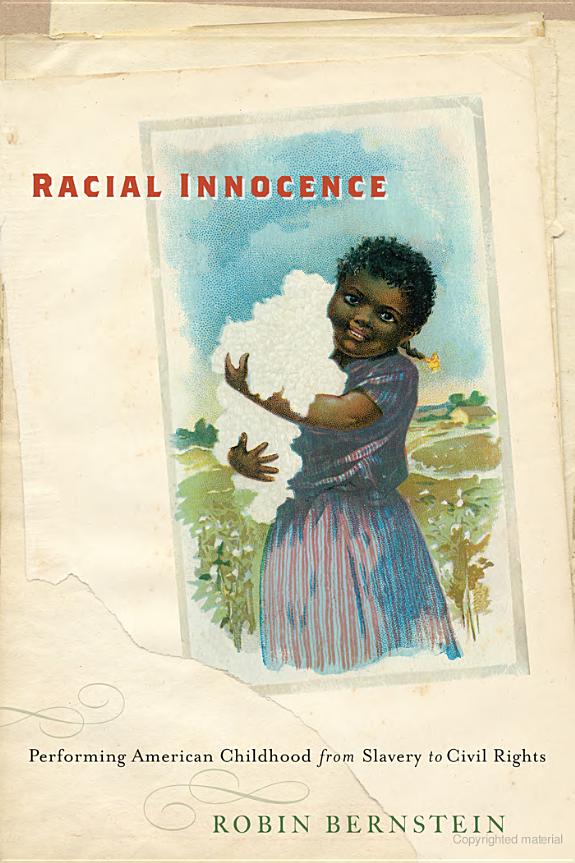
Racial Innocence
Performing American Childhood from Slavery to Civil Rights
by Robin Bernstein
307 pages· 2011· ISBN 9780814787090
About
Beginning in the mid nineteenth century in America, childhood became synonymous with innocenceoa reversal of the previously- dominant Calvinist belief that children were depraved, sinful creatures. As the idea of childhood innocence took hold, it became racialized: popular culture constructed white children as innocent and vulnerable while excluding black youth from these qualities. Actors, writers, and visual artists then began pairing white children with African American adults and children, thus transferring the quality of innocence to a variety of racial-political projectsoa dynamic that Robin Bernstein calls racial innocence. This phenomenon informed racial formation from the mid nineteenth century through the early twentieth, while enabling sharply divergent political agendas to appear, paradoxically, to be innocuous, natural, normal, and therefore justified. Racial Innocence takes up a rich archive including books, toys, theatrical props, and domestic knickknacks which Bernstein analyzes as scriptive things that invite or prompt historically-located practices while allowing for resistance and social improvisation.Integrating performance studies with literary and visual analysis, Bernstein offers singular readings of theatrical productions, literary works, material culture including Topsy pincushions and Raggedy Ann dolls, and visual texts ranging from fine portraiture to advertisements for lard substitute. Throughout, Bernstein shows how innocence gradually became the exclusive province of white childrenountil the Civil Rights Movement succeeded not only in legally desegregating public spaces, but in culturally desegregating the concept of childhood itself.
Discuss Racial Innocence with other readers
Join or start a book club for Racial Innocence on Readfeed. Live chat, shared reading progress, and AI discussion questions — free to get started.
Frequently asked questions
How do I join a book club for Racial Innocence?
Sign up free on Readfeed, then browse public clubs or start your own club with Racial Innocence as the current read. Invite friends with a share link and discuss together with live chat and AI discussion questions.
Can I discuss Racial Innocence with other readers online?
Yes. Readfeed book clubs let you chat live, share progress, and join discussions about Racial Innocence with readers worldwide — whether your club is virtual, in-person, or hybrid.
Is Readfeed free?
Yes. Creating an account and joining book clubs is free. Sign up to find readers who love the same books and start discussing today.